








By Joseph Zdrilich • October 2, 2026
What to do if you hit a deer in Georgia: steps at the scene, when you must call police, who is at fault, and whether insurance covers the damage.
By Joseph Zdrilich • May 22, 2026
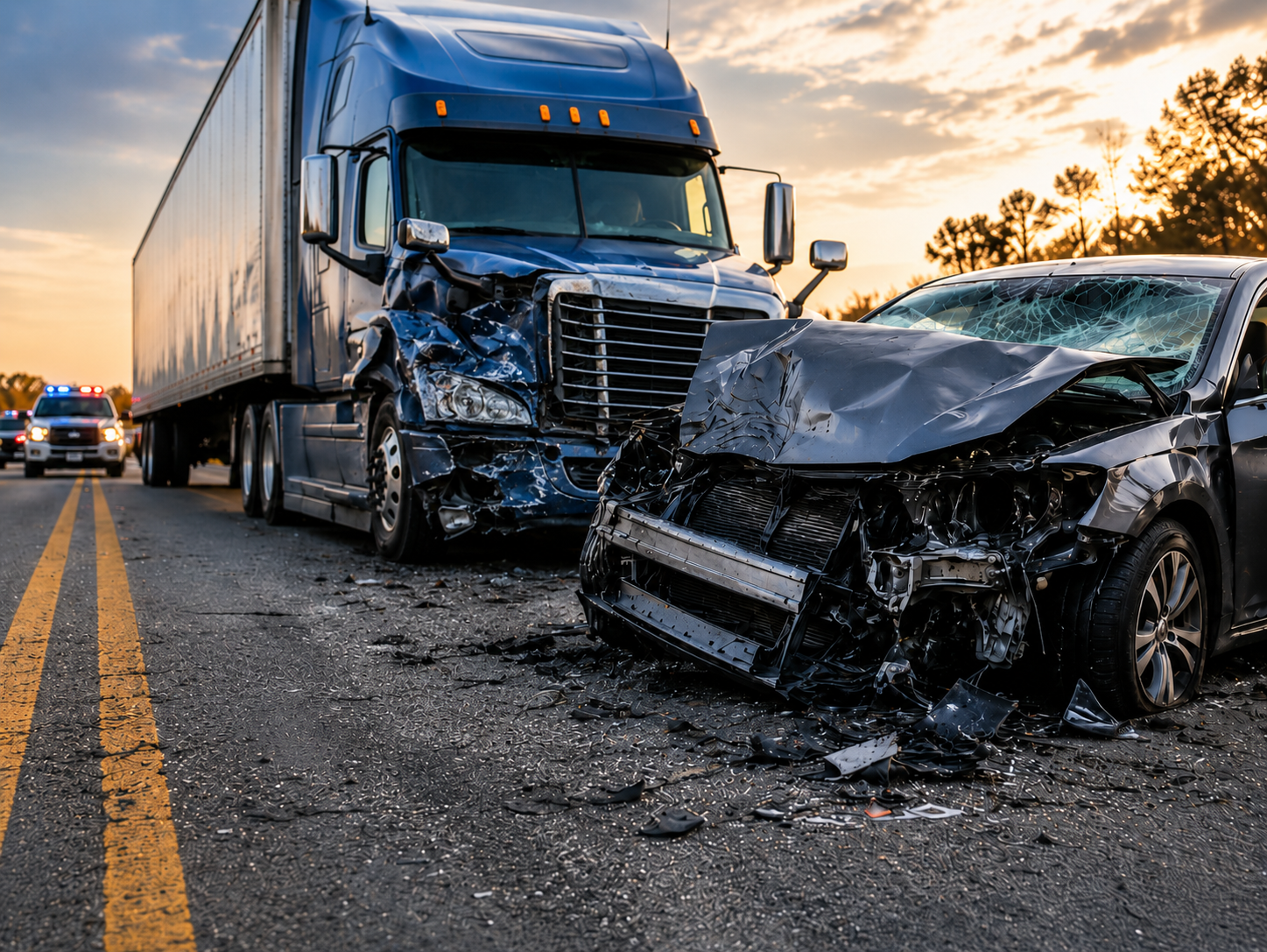
Truck accident claims in Duluth, GA can involve serious injuries, multiple liable parties, and commercial insurance companies. Learn what makes these cases different.
Lady Justice statue beside gavel and stacked law books on a dark background
By Joseph Zdrilich • January 23, 2026
Learn how to drive defensively on Savannah's historic streets, avoid the most common crash causes, and protect your health and legal rights after a collision.
Lawyer writing in a notebook at a desk with a laptop, gavel, and gold justice statue
By Joseph Zdrilich • January 16, 2026
Practical defensive driving tips for Savannah's narrow historic streets and busy corridors like Abercorn Street, plus what to do right after a car accident.
By Joseph Zdrilich • January 9, 2026
 Most of us don't enjoy heavy traffic and avoid it if at all possible. There are certain areas in Savannah that drivers fear more than others. They're constantly clogged, have confusing signals, or have a multitude of feeder streets. Conditions like this make us want to get a bike! But these dangerous roads can be circumvented so you don't end up in an injury accident. Defensive driving is often joked about, but it's useful to avoid the hassle of a crash. Savannah’s roads mix narrow, historic lanes with busy arterials and surges of tourist traffic, conditions that can catch even careful drivers off guard. This guide shows you how to avoid accidents here by combining proven defensive-driving habits, clear steps to prevent distracted driving under Georgia law, and a local understanding of repeat trouble spots. You’ll learn practical scanning, speed, and space-management techniques, which intersections deserve extra caution, and how local safety programs affect everyday driving. The guide focuses on four areas: driving through high-risk intersections, preventing distracted driving under the Georgia Hands-Free Law, defensive-driving tips tailored to Savannah, and how traffic laws and Vision Zero projects support safer streets. Throughout, you’ll find straightforward actions to reduce risk and concise next steps if prevention fails, so you can drive with greater confidence and know what to do after a crash. What Are Savannah’s Most Dangerous Intersections and How Can You Use Them Safely? High-risk intersections in Savannah typically feature heavy traffic, complex geometry, and many pedestrians, all of which increase the risk of angle and rear-end collisions. When you know a location’s specific hazard: limited sightlines, frequent left turns, or poor lighting, you can choose targeted defensive actions to lower your risk. The following paragraph includes a relevant chart to help you avoid the most risky. Which Intersections in Savannah Have the Highest Accident Rates? The table below lists several intersections often mentioned in local safety conversations, the primary risk at each site, and a concise action you can take right away. This risk-to-action breakdown helps drivers prioritize caution on routes with heavy foot traffic and complicated vehicle movements so you can adopt specific defensive behaviors while traveling these corridors. What Defensive Driving Strategies Reduce Risks at Savannah’s Dangerous Roads? You can cut intersection-related crash risk by using a few consistent defensive strategies that focus on anticipation and space management. First, scan well beyond the car in front of you to catch braking patterns and give yourself time to react. Second, control speed to match visibility and pedestrian activity. Third, signal and choose lanes early so other road users aren’t surprised by sudden moves. Anticipation, controlled speed, and clear signaling work together to lower reaction needs and expand safety margins. Practicing these on problem corridors like Abercorn and Ogeechee turns them into reliable habits that prevent common angle and rear-end crashes. How Can You Prevent Distracted Driving Accidents in Savannah? Distracted driving reduces situational awareness and slows reactions, increasing crash risk. Preventing it takes both personal habits and compliance with the law. Georgia’s Hands-Free Law bans holding or supporting a mobile device while driving. The rule targets the most dangerous distractions (manual and visual). To stay focused, pre-program routes, enable Do Not Disturb while driving, and ask passengers to handle calls or navigation. Enforcement has ramped up in recent years, and if someone else’s distraction causes an injury, you may need legal help to protect your rights. What Does the Georgia Hands-Free Law Require Drivers to Know? The Georgia Hands-Free Law makes it illegal to hold or support a mobile device while operating a vehicle, with limited exceptions for emergencies and approved in-vehicle systems. To comply, use voice commands, Bluetooth, or the vehicle's built-in systems for calls, and set navigation before you start driving. Violations can lead to citations and greater liability after a crash. Zdrilich Injury Law has handled distracted-driving cases in Savannah and can advise injured drivers on legal options if a distracted driver caused harm. Knowing the rules helps you stay safer and strengthens any future legal claim. Which Common Distractions Should Savannah Drivers Avoid? Distractions in vehicles vary by risk and deserve specific countermeasures. The most hazardous are phone use, fiddling with infotainment or navigation while moving, passenger distractions, and eating or drinking. Simple steps like stowing phones, programming systems before you drive, asking a passenger to help, or pulling over to eat, remove temptations that reduce driving performance. Regularly using these tactics prevents brief lapses that frequently lead to collisions in urban and tourist-heavy areas. Phone handling : Keep devices out of reach to avoid manual and visual distraction. Navigation adjustments while moving : Enter destinations before you pull away. Passenger interference : Designate a passenger to manage calls, directions, and other tasks. When you remove these distractions, you improve reaction time and control, especially important on crowded Savannah streets. What Are the Best Defensive Driving Tips to Avoid Car Accidents in Savannah? Defensive driving in Savannah centers on anticipation, managing space, and adjusting speed to local conditions like narrow historic lanes and coastal weather. Core habits include keeping a three-second following distance in normal driving, scanning intersections for turn signals and pedestrians, and slowing in wet or low-visibility conditions to increase stopping distance. These practices give you the time and space to avoid common crash types. Adopt the simple habits below to respond calmly to sudden events and protect vulnerable road users in mixed-use areas. How Does Defensive Driving Reduce Accident Risks on Savannah Streets? Defensive driving raises your margin of safety, so you need less aggressive braking or steering when a hazard appears. Scanning for cues: brake lights, pedestrian motion, and cyclist positioning lets you adjust speed and path before a situation becomes critical. On tree-lined, narrow streets with limited sightlines, slowing early and carefully positioning your lane prevents surprise conflicts with pedestrians or parked cars. These adjustments reduce angle and rear-end crashes across the city’s varied road types. What Practical Driving Habits Should You Adopt in Savannah’s Unique Road Conditions? Use a short, practical checklist to handle Savannah’s mix of narrow old-town streets and busy arterials: slow down well before intersections, choose lanes early in tourist areas, keep a continuous watch on crosswalks, and add space when following trucks or buses. Signal well in advance and avoid last-second lane changes to reduce unpredictable interactions. Making these habits routine turns reactive driving into planned risk management and helps you handle seasonal congestion and local enforcement zones. A few important tips: Maintain increased following distance : Give yourself time to stop safely. Scan 10–15 seconds ahead : Spot developing hazards before they become immediate threats. Position lanes deliberately : Pick your lane early to minimize conflicts at turns and merges. These steps build a resilient driving pattern that addresses Savannah-specific hazards and readies you for what to do if a collision still happens. Zdrilich Injury Law can offer legal guidance and representation to injured drivers pursuing compensation after a crash, with experience handling Savannah car-accident claims. How Do Savannah Traffic Laws and Local Safety Initiatives Help Prevent Accidents? Traffic laws and local safety projects set expectations for driver behavior and fund fixes that reduce conflict points. Rules like the Georgia Hands-Free Law and posted speed limits discourage risky behavior, while community efforts such as Savannah Vision Zero focus on redesigning streets, improving crosswalk visibility, and adding traffic calming where crashes are most severe. Knowing how these laws and projects affect your route helps you anticipate enforcement and adapt your driving for a safer shared environment. What Key Savannah Traffic Laws Should Every Driver Follow? Follow hands-free device restrictions, obey posted speed limits, yield to pedestrians at crosswalks, and use proper signaling and lane discipline. These laws matter because they make safe behavior the norm and reduce human-error crashes like sideswipes and intersection collisions. Practically, this means slowing in high-traffic areas, using hands-free calling, and never assuming the right of way, actions that protect drivers, pedestrians, and cyclists across Savannah’s mixed-use corridors. How Are Local Programs Like Savannah Vision Zero Improving Road Safety? Vision Zero targets traffic deaths and serious injuries through focused changes: safer crosswalks, reduced speed zones, and redesigned intersections that lower conflict between people and vehicles. Recent projects concentrate on high-injury corridors, add lighting, and use traffic calming to slow speeds, measures that change driver expectations and reduce severe crashes. Drivers who follow these changes and adapt their habits help produce measurable declines in collisions, making the network safer for everyone. Zdrilich Injury Law knows how physically, financially, and emotionally disruptive a car crash can be. If prevention fails and you’re injured in a collision, reach out for help with documenting the scene, preserving evidence, and understanding your legal options. Our Savannah car accident team, led by Joseph Zdrilich, provides experienced advocacy tailored to local claims. Frequently Asked Questions What should I do immediately after an accident in Savannah? First, move to a safe spot if you can. Check for injuries and call 911 to report the crash. Exchange names, contact information, insurance details, and vehicle information with the other driver(s). Take photos of the scene and any damage, and collect witness contact details when possible. Notify your insurer promptly. Even if you feel fine, get a medical check; some injuries show up later. Talking to a car accident lawyer early can protect your rights and make sure you collect the evidence you’ll need. How can I stay updated on local traffic laws and safety initiatives in Savannah? Stay informed by checking the City of Savannah’s official website and following local news outlets. Follow the Savannah police and traffic-safety organizations on social media for timely updates. Subscribing to newsletters from groups like Savannah Vision Zero and joining community traffic-safety forums will also keep you posted on projects, enforcement changes, and public meetings. Are there specific times when Savannah's streets are more dangerous? Yes. Peak tourist seasons and festival weekends bring more pedestrians and congestion. Weekday rush hours, roughly 7–9 AM and 4–6 PM, also see heavier traffic. Weather events like rain or fog reduce visibility and traction, raising risk. Being aware of these times helps you plan routes and drive more cautiously when conditions are worse. What resources are available to help drivers improve their defensive driving skills? You can improve skills through online courses and workshops from organizations like the National Safety Council or through local driving schools that offer urban-driving classes. Many insurers give discounts for completing defensive-driving courses. Community programs and local traffic-safety events also offer practical tips and hands-on training to sharpen your habits. How can I report unsafe driving behavior in Savannah? If you see dangerous driving, call 911 for immediate threats or the non-emergency police line for less urgent issues. Give the vehicle description, license plate, and location when possible. To report chronic problems like a dangerous intersection or recurring speeding, you can contact the City of Savannah’s traffic department through its website. Community reports help officials prioritize safety fixes. What should I know about pedestrian safety in Savannah? Pedestrian safety matters in Savannah’s popular and historic areas. Drivers should always yield at crosswalks and be alert in tourist zones. Pedestrians should use marked crossings, watch for turning vehicles, and avoid distractions while crossing. Local improvements like better lighting, clearer crosswalks, and traffic calming are intended to protect people on foot. Everyone sharing the road has a role in keeping those spaces safe. Couldn't Avoid an Accident? We Can Help The expert team at Zdrilich has years of experience helping accident victims get back on track. We guide you through the claims process, negotiate with insurers, and even file a lawsuit if the settlement offered isn't worthy of your injuries. Contact us today for a free consultation.
By Joseph Zdrilich • January 2, 2026
An accident with an 18 wheeler changes lives in seconds. One moment you are driving to work or home. The next, you face injuries, medical bills, lost income, and uncertainty. These crashes feel overwhelming because they involve massive trucks, powerful companies, and complex laws. If you are searching for an 18 wheeler truck accident lawyer Georgia, you are likely looking for answers and protection. You may wonder who is responsible. You may worry about insurance companies. You may feel unsure about your next step. This guide explains how 18 wheeler accidents happen, why these cases are different from car accidents, and how a truck accident lawyer can help. It also explains what to look for when choosing the best 18 wheeler accident lawyer for your case. Why 18 Wheeler Accidents Are So Serious An 18 wheeler can weigh up to 80,000 pounds when fully loaded. A passenger vehicle weighs a fraction of that amount. When these vehicles collide, the force is extreme. Common injuries from 18 wheeler crashes include: Traumatic brain injuries Spinal cord damage Broken bones Internal bleeding Burns Permanent disability Fatal injuries Even low-speed truck accidents can cause severe harm. High-speed crashes often result in life-altering consequences. Because of this, Georgia law allows injured victims to pursue compensation when negligence plays a role. Common Causes of 18 Wheeler Truck Accidents in Georgia Understanding the cause of a crash helps determine liability. Many 18 wheeler accidents involve more than one negligent party. Driver Fatigue Federal regulations limit how long truck drivers can stay on the road. Despite these rules, fatigue remains a leading cause of truck accidents. Tired drivers react slower and make poor decisions. Distracted Driving Truck drivers may use phones, GPS systems, or onboard computers while driving. Even a brief distraction can lead to a catastrophic crash. Speeding and Aggressive Driving Large trucks require longer stopping distances. Speeding increases the risk of rear-end collisions, jackknife accidents, and rollovers. Improper Training Some trucking companies fail to train drivers properly. Inexperienced drivers may struggle with lane changes, turns, or emergency braking. Mechanical Failures Brake failure, tire blowouts, and steering problems often stem from poor maintenance. These failures can place fault on trucking companies or maintenance contractors. Improper Loading Unbalanced or overloaded cargo can cause trucks to tip or lose control. Cargo loading companies may share responsibility in these cases. Why Truck Accident Cases Are More Complex Than Car Accidents An 18 wheeler accident is not handled like a standard car crash claim. These cases involve: Federal trucking regulations Multiple insurance policies Corporate defendants Specialized evidence Aggressive legal defense teams A general personal injury lawyer may not have the experience needed. An 18 wheeler accident lawyer understands how trucking companies operate and how they defend claims. Who Can Be Held Liable in an 18 Wheeler Accident? Liability often extends beyond the driver. A skilled truck accident attorney investigates all possible responsible parties. The Truck Driver Drivers may be liable for speeding, fatigue, intoxication, or distracted driving. The Trucking Company Companies may be responsible for unsafe policies, poor training, or forcing drivers to violate safety rules. Maintenance Providers Third-party maintenance companies may be liable for mechanical failures caused by poor inspections or repairs. Cargo Loaders Improperly secured or overloaded cargo can cause accidents. Loaders may share fault. Manufacturers Defective truck parts may lead to product liability claims. Identifying every liable party increases the chances of full compensation. Georgia Laws That Affect 18 Wheeler Accident Claims Georgia law shapes how truck accident cases proceed. Comparative Negligence Rule Georgia follows a modified comparative negligence system. You can recover damages if you are less than 50% at fault. Your compensation is reduced by your percentage of fault. Statute of Limitations Most personal injury claims must be filed within two years of the accident date. Missing this deadline usually means losing your right to recover compensation. Commercial Insurance Requirements Trucking companies must carry higher insurance limits than passenger vehicles. This often increases the potential value of a claim. What Compensation May Be Available? An experienced 18 wheeler truck accident lawyer Georgia can pursue damages such as: Medical expenses Future medical care Lost wages Loss of earning capacity Pain and suffering Emotional distress Permanent disability Wrongful death damages for families Insurance companies rarely offer fair compensation without pressure. Legal representation helps level the playing field. What to Do After an 18 Wheeler Accident Your actions after a crash matter. Seek Medical Care Get medical help immediately, even if injuries seem minor. Some injuries take time to appear. Call Law Enforcement A police report provides official documentation of the crash. Document the Scene If possible, take photos of vehicles, damage, road conditions, and injuries. Avoid Insurance Statements Do not give recorded statements without speaking to a lawyer. Contact a Truck Accident Lawyer Early legal involvement protects evidence and strengthens your claim. How an 18 Wheeler Accident Lawyer Helps A qualified 18 wheeler accident lawyer provides critical support. Investigation Your lawyer gathers driver logs, black box data, maintenance records, and witness statements. Evidence Preservation Trucking companies may destroy evidence quickly. A lawyer sends preservation letters to stop this. Negotiation Insurance companies aim to minimize payouts. A lawyer negotiates aggressively for fair compensation. Litigation If the settlement fails, your lawyer prepares your case for trial. Choosing the Best 18 Wheeler Accident Lawyer Not all lawyers handle truck accident cases effectively. When searching for the best 18-wheeler accident lawyer, look for: Experience with commercial truck cases Knowledge of federal trucking regulations Resources to handle large corporate defendants Trial readiness Clear communication If you are searching online for an 18-wheeler accident lawyer near me, focus on experience and results, not just proximity. Why Local Georgia Experience Matters Georgia has unique traffic patterns, court systems, and legal procedures. A local truck accident lawyer understands: Georgia highways and trucking routes Local courts and judges State-specific negligence laws This knowledge improves strategy and case outcomes. Insurance Company Tactics in Truck Accident Claims Trucking insurers act quickly after crashes. Their goals differ from yours. Common tactics include: Quick low settlement offers Blaming the injured driver Delaying the claims process Disputing medical treatment Minimizing long-term injuries A strong truck accident attorney counters these tactics with evidence and legal pressure. Wrongful Death After an 18 Wheeler Accident Some truck accidents result in fatal injuries. Families may pursue a wrongful death claim under Georgia law. Damages may include: Funeral expenses Loss of financial support Loss of companionship Emotional suffering These cases require sensitivity and strong legal advocacy. FAQs: 18 Wheeler Truck Accident Lawyer Georgia What makes 18 wheeler accidents different from car accidents? They involve larger vehicles, more severe injuries, federal regulations, and multiple liable parties. Do I need a lawyer for an 18 wheeler accident? Yes. These cases are complex and insurers fight aggressively. Legal help improves outcomes. How long do I have to file a claim in Georgia? Most cases must be filed within two years from the accident date. What if I was partly at fault? You may still recover compensation if you are less than 50% at fault. How much is my case worth? Case value depends on injuries, liability, medical costs, and long-term impact. A lawyer can evaluate this. Final Thoughts An 18-wheeler accident can leave lasting physical, emotional, and financial damage. You should not face trucking companies and insurers alone. Georgia law gives you the right to pursue compensation, but success depends on experience and preparation. If you are searching for an 18-wheeler truck accident lawyer in Georgia, choose a legal team that understands trucking cases and puts your recovery first. If you or a loved one was injured in an 18-wheeler crash, now is the time to act. Evidence fades. Deadlines approach. Insurance companies are already working against you. Contact Zdrilich Injury Law today for a free consultation . Our team will review your case, explain your options, and fight for the full compensation you deserve.
By Joseph Zdrilich • December 18, 2025
Traffic in Georgia can feel slow, tight, and unpredictable. If you ride a motorcycle, you may feel tempted to slide between cars to get ahead. Many riders call this lane splitting. Before you do it, you need to understand the law. You need to know how police, insurers, and courts treat this behavior. This article gives a clear answer to the question “is lane splitting legal in GA” . It also explains why the state bans it, how fault is handled in crashes, and what steps riders should take to stay safe. What Is Lane Splitting? Lane splitting happens when a motorcycle moves between two lanes of traffic that travel in the same direction. The rider uses the narrow gap between cars to pass slower or stopped vehicles. A related action is lane filtering. Lane filtering happens when a motorcycle moves between cars that are stopped or barely moving. Riders usually filter at red lights or in gridlock. Many people use both terms to describe the same behavior: moving between vehicles instead of staying within a lane. Is Lane Splitting Legal in Georgia? No. Lane splitting is illegal in Georgia. Georgia law states that a motorcyclist cannot ride between lanes of traffic or between rows of vehicles. The state requires motorcycles to follow the same rules as cars when it comes to lane position. Under Georgia’s law, a motorcyclist must occupy a full lane. Passing a vehicle in the same lane or using the space between cars violates the statute. Because of that, lane splitting and lane filtering remain fully prohibited. Why Georgia Bans Lane Splitting Georgia bans lane splitting for clear safety reasons. The state aims to reduce collisions, keep traffic predictable, and protect riders and drivers. Here are the main concerns: Blind Spots Drivers may not see a motorcycle coming up between lanes. A sudden lane change can trap the rider with no room to escape. Limited Space The gap between cars does not give riders enough room for braking or swerving. Unpredictable Movement Drivers expect vehicles to stay within lanes. A motorcycle that moves between lanes creates unpredictable motion. That unpredictability increases the chance of a crash. Enforcement A clear ban makes traffic enforcement simpler and reduces disputes about right-of-way. These reasons led lawmakers to prohibit lane splitting in all forms in the state. What States Allow Lane Splitting or Lane Filtering? Understanding the national picture helps answer the related question, “what states allow lane splitting?” Most states do not allow lane splitting. Only a few allow some form of lane splitting or lane filtering. States That Allow Lane Splitting or Lane Filtering California permits lane splitting statewide. Arizona allows limited lane filtering in slow or stopped traffic. Utah allows riders to filter forward when traffic stops at intersections. Montana has certain conditions that allow lane filtering. Other states either ban it completely or have no clear law, which often means police treat it as illegal. Georgia is not part of the group that allows lane splitting or filtering. Riders in Georgia must stay fully within their lane at all times. Penalties for Lane Splitting in Georgia If a motorcyclist lane splits in Georgia, several consequences can follow: Traffic Ticket Police can issue a citation that includes a fine. The amount varies by county. Points on Your License Lane splitting can lead to points being added to your driving record. Points affect insurance and can lead to license suspension if they add up. Insurance Problems Insurers may raise your rates after a violation. They may also argue you acted recklessly if a crash occurs. Fault in a Crash Lane splitting in Georgia often leads to a finding of negligence per se. That means the act itself counts as evidence of negligence. This makes any injury claim harder to win. Comparative Negligence Georgia uses a 50% comparative negligence rule. If you are at least 50% at fault, you cannot recover damages. Lane splitting, because it is illegal, can push your fault percentage higher. How Lane Splitting Affects Car Accident and Motorcycle Injury Claims If you get into a crash while lane splitting: You May Be Assigned High Fault Because lane splitting is illegal, insurers often argue that you caused or contributed heavily to the crash. Your Compensation May Be Reduced If you are less than 50% at fault, you may recover reduced damages. The reduction matches your percentage of fault. Your Claim May Be Denied If insurers believe lane splitting was the main cause of the crash, they may deny your claim entirely. A Lawyer Can Still Help A skilled motorcycle accident lawyer or auto injury lawyer may still show that the other driver acted carelessly. Examples include failing to signal, drifting between lanes, or driving aggressively. Fault is not always one-sided. Even when lane splitting occurs, another driver’s actions may contribute to the collision. A lawyer can analyze the crash, gather evidence, work with experts, and protect your rights under Georgia law. Safe Riding Practices in Georgia Because lane splitting is illegal, riders should follow practices that follow the law and reduce risk: Stay fully within your lane. Make full and clear lane changes when passing. Use turn signals. Increase your following distance. Stay visible by using lights and reflective gear. Ride defensively and assume other drivers may not see you. These steps reduce the risk of a crash and strengthen your position if one happens. FAQ: Lane Splitting in Georgia Q: Is lane splitting legal in GA? A: No. Lane splitting is illegal under Georgia law. Riders cannot travel between lanes or between rows of vehicles. Q: Is lane filtering legal in Georgia? A: No. Lane filtering, like lane splitting, is prohibited. A motorcycle must stay within a lane at all times. Q: What states allow lane splitting? A: Only a few states allow any form of lane splitting or lane filtering. California is the most widely known example. Most states ban it. Q: Can I recover compensation if I crash while lane splitting? A: It is possible but harder. Because lane splitting is illegal, insurers may assign high fault to the rider. Recovery depends on Georgia’s comparative negligence rule. Q: Should I call a lawyer after a lane-splitting crash? A: Yes. Fault is not always clear. A lawyer can review evidence, deal with insurers, and help protect your rights. Conclusion Lane splitting may seem fast or convenient in heavy Georgia traffic, but it carries major risk. Georgia law bans lane splitting and lane filtering. A rider who attempts it may face tickets, insurance issues, and serious legal problems after a crash. Understanding this law helps protect your safety and your rights. Motorcyclists deserve respect on the road. They also deserve strong legal support after an injury. If you were involved in a crash — whether lane splitting played a role or not — you should speak with a lawyer who understands Georgia motorcycle and car accident laws. Strong Legal Representation If you or someone you love suffered injuries in a motorcycle or car accident in Georgia, do not face the insurance companies alone. You deserve a clear explanation of your rights, strong representation, and a team that takes your case seriously. Contact Zdrilich Injury Law today for a free, confidential consultation. Our team will review your case, explain your options, and fight for the compensation you deserve.
By Joseph Zdrilich • December 15, 2025
Most people think hiring an attorney after an accident will empty their bank accounts when they're already struggling with medical bills, property damage, and lost income. Well, most people have it wrong. Atlanta injury attorneys work on a contingency basis, allowing anyone who's been injured to seek compensation under the law, regardless of net worth, and only get paid when they win for you. But attorneys do require a fee for their expertise and services. How they calculate those fees is something every potential client should know. Understanding what influences car accident attorney fees in Atlanta helps injured drivers make smarter choices about representation, expected costs, and how to maximize net recovery after a crash. This article explains the main fee models used by Georgia personal injury lawyers , breaks down separate case expenses that reduce your settlement, and shows which case factors most affect both attorney percentage and final payout. You will learn practical ways to limit costs, a checklist of questions to ask prospective attorneys, and how local rules, such as Georgia’s statute of limitations and comparative negligence, can change your financial outcome. The sections that follow define contingency fees and typical Atlanta ranges, itemize non-attorney expenses with a clear EAV table, analyze how complexity and venue affect fees and settlements, and provide actionable guidance for choosing counsel. Throughout, we include firm-specific notes where appropriate about contingency/no-upfront-fee practices, as well as clear communication, so you can compare options and maximize your recovery. What Are Contingency Fees and How Do They Work for Atlanta Car Accident Lawyers? Contingency fees are a payment model where the attorney’s fee is a percentage of the settlement or verdict, aligning the lawyer’s incentive with the client’s recovery and removing upfront payment barriers to legal help. This mechanism shifts risk: the attorney advances work and accepts the chance of no payment if there is no recovery, while the client avoids hourly billing and can access experienced representation. In Atlanta and across Georgia, contingency arrangements are standard for car accident cases because they let injured people pursue compensation without immediate legal costs. Understanding these mechanics helps claimants compare offers and estimate net recovery after attorney percentage and case expenses are deducted. What Is a Contingency Fee in Georgia Personal Injury Law? A contingency fee in Georgia means the lawyer is paid only if the client recovers money through settlement or judgment, and the cost is usually a negotiated percentage of the gross recovery. Ethically and practically, attorneys explain the rate, how expenses are repaid, and the point at which fees are calculated, usually from the final settlement or verdict figure. For example, a 33% contingency on a $90,000 settlement results in a $29,700 attorney fee before subtracting case expenses; straightforward math helps clients compare offers. Knowing this calculation upfront helps claimants ask the right questions during consultations and to prioritize net recovery when evaluating counsel. How Do Contingency Fees Differ Between Pre-Suit Settlements and Litigation? Contingency fees typically vary depending on whether a case resolves before a lawsuit is filed or proceeds through litigation, as litigation requires more time, court costs, and risk for both the attorney and the client. In practice, attorneys often charge a lower percentage for pre-suit settlements and a higher rate if significant discovery, depositions, or trial work is required; this compensates for the additional resources and the uncertainty of trial. For example, a claim that settles early may attract a contingency of around one-third, whereas a case taken through trial may have a higher contingency to reflect the time and expense involved. Comparing these scenarios helps clients estimate net outcomes and decide whether early settlement offers are reasonable in relation to the probable trial gains. Why Are Contingency Fees Beneficial for Car Accident Victims in Atlanta? Contingency fees increase access to legal representation by removing upfront cost barriers and creating aligned incentives. Lawyers benefit only when clients recover money, which motivates strong negotiation and case management. This model also encourages attorneys to invest in case-building strategies that maximize damages, such as medical documentation, expert testimony, and targeted discovery, because those investments pay off only if recovery occurs. For accident victims, that means qualified counsel can pursue full economic and non-economic damages without the client shouldering initial bills, improving the chance of a fair outcome. Knowing these advantages helps claimants focus on value and net recovery rather than headline fee percentages. Contingency arrangements provide no-upfront-cost access to experienced counsel. Aligned incentives motivate attorneys to maximize the value of settlements or verdicts. Risk-sharing reduces financial strain on injured clients while preserving legal options. What Additional Case Costs Should You Expect Beyond Attorney Fees? Non-attorney case expenses are the separate items, including filing fees, medical records, expert witness charges, deposition, and court reporter costs, that are deducted from gross recovery or otherwise repaid, and they can materially reduce your net settlement. These costs vary by case complexity, the need for medical experts, and whether the claim proceeds to trial. Law firms sometimes advance these expenses and recoup them from the settlement; other times, clients may be billed upfront for discrete items. Clear discussion and written disclosure of how expenses are advanced, tracked, and repaid can prevent surprises and preserve trust between client and counsel. Common case expenses in Atlanta car accident claims often include filing fees, medical records retrieval, expert witness fees, and deposition costs: Filing fees and court costs taken at early litigation stages. Medical record retrieval and copying fees billed per provider or advanced by counsel. Expert witness retainers and trial preparation fees can be substantial. Deposition, court reporter, and transcript costs during discovery and trial. What Common Expenses Are Separate from Attorney Fees in Atlanta Car Accident Cases? Aside from attorney percentage, separate expenses include medical record retrieval costs, hospital billing copies, expert witness retainers, deposition and transcript fees, investigator charges, and, when applicable, court filing and service fees. The amounts depend on the number of providers, the extent of medical opinions required, and whether accident reconstruction or specialized testimony is necessary. Clients should also expect administrative costs like copying and mailing, although these are generally modest compared with expert expenses. Good documentation and early medical treatment records often reduce the need for costly reconstruction or supplemental expert work. How Does Zdrilich Injury Law Handle Case Expenses Transparently? Zdrilich Injury Law emphasizes clear communication about how case expenses are advanced and repaid, providing explanations during the initial consultation and throughout the case handling process so that clients understand their net recovery. The firm’s stated commitment to transparency means clients can expect discussions about anticipated costs, who advances them, and how expenses will be deducted from any recovery, which reduces surprises at resolution. For prospective clients, asking the firm to outline likely costs and to provide written explanations during the free, no-obligation consultation creates a clear baseline. This openness helps clients compare net outcomes across counsel options and make informed decisions about pursuing settlement versus litigation. Which Factors Influence Your Car Accident Attorney Fees and Settlement Amounts in Atlanta? Several interrelated factors determine both the attorney fee percentage you may be offered and the expected settlement amount, including case complexity, injury severity, litigation status, evidence quality, and the urban venue where the crash occurred. Each of these factors affects the resources required to prove the claim, the willingness of insurers to offer early settlements, and the potential need for expert testimony or trial preparation. Recognizing how these variables interact helps claimants assess whether a higher contingency percentage might be justified by greater expected recovery or whether an early settlement is preferable to protracted litigation. How Does Case Complexity and Injury Severity Affect Attorney Fees? Case complexity and injury severity directly increase the work required to prepare a claim, which can influence whether an attorney negotiates a higher contingency percentage or expects greater time investment before resolution. Severe injuries often result in higher medical bills, a longer recovery period, and the need for life-care planning or vocational experts, which increases both the case value and expenses. Conversely, minor soft-tissue injuries may resolve quickly with less documentation, attracting lower costs and a more straightforward fee arrangement. Clients should weigh the expected gross recovery against probable expenses to determine if the attorney’s proposed contingency is reasonable given the resources needed. What Impact Does Litigation Versus Settlement Have on Fees and Costs? Litigation generally raises costs and extends timelines because discovery, depositions, motion practice, and trial preparation consume significant attorney time and third-party resources, which often translates to a higher contingency percentage or larger overall expenses. Settlements before suit or early in litigation tend to be faster and less expensive, but may result in lower gross amounts if insurers offer conservative early offers. Clients must balance the incremental potential gain at trial against the additional expenses and the increased contingency percentage often associated with protracted litigation. This trade-off is central to strategic decisions about accepting offers versus proceeding to trial. How Do Evidence and Documentation Influence Your Case Value and Fees? Strong documentation, medical records, timely treatment, crash photos, witness statements, and police reports raise settlement value by reducing ambiguity and the need for costly experts, encouraging insurers to offer fairer early settlements. When evidence is lacking, attorneys may need to hire reconstruction specialists or medical experts to bridge gaps, increasing costs and time. Good documentation thus both increases gross recovery and reduces the relative portion lost to additional expenses, improving net recovery for the client. Preparing clear evidence early makes your case more attractive to insurers and can keep attorney-related costs lower. How Does Atlanta’s Urban Venue Affect Car Accident Claims and Attorney Fees? Atlanta’s dense traffic corridors and high crash volumes result in a steady flow of claims and unique accident profiles, such as rush-hour multi-vehicle collisions, pedestrian incidents, and transit-related crashes, that can increase case difficulty and resource demand. Local court calendars and judges' practices significantly influence scheduling and litigation pacing, ultimately affecting attorney time and potential costs. High case volume can pressure insurers to resolve routine claims quickly, but some collisions require more investigation and expert involvement. Familiarity with local venues and common accident patterns matters when evaluating counsel and expected fee/cost dynamics. What Is Georgia’s Comparative Negligence Rule and How Does It Affect Your Recovery? Georgia follows a modified comparative negligence rule, where a claimant’s recovery is reduced in proportion to their percentage of fault and is barred entirely if they are 50% or more at fault. This directly affects both gross damages and the attorney’s effective return. For example, a $100,000 award reduced by 20% for claimant fault yields $80,000 gross recovery before attorney fees and expenses, which lowers net recovery in absolute terms and may change the attorney’s view on pursuing trial. Understanding comparative negligence helps claimants and counsel assess settlement risk and whether negotiation or litigation makes financial sense, given potential fault apportionment. This legal rule is a critical factor to discuss during any fee or strategy conversation. How Can You Choose the Right Atlanta Car Accident Lawyer to Save on Fees? Choosing counsel to save on fees requires asking specific questions about contingency percentages, expense advancement, expected net recovery, and the firm’s track record with similar cases; the goal is to evaluate value, not just the lowest headline fee. Experience with local courts, insurer patterns, and expert networks can improve negotiation outcomes and reduce the need for expensive litigation. Equally important are red flags that suggest hidden costs or inadequate resources, such as vague answers about expense handling, an unwillingness to put terms in writing, or unrealistic guarantees. The subsections below provide a checklist of questions to ask, warning signs of low-fee traps, and why local expertise matters when weighing counsel options. When vetting attorneys, prepare to compare offers not only on the percentage but also on projected expenses and communication practices to accurately estimate the net recovery. What Questions Should You Ask About Attorney Fees and Case Expenses? What contingency percentage applies for settlement versus trial? Who advances costs, and how are they repaid from recovery? Will you provide a written fee and expense agreement with an example of the math? What experts or expenses do you expect in a case like mine? These questions help you compare apples to apples when selecting representation and avoid surprises later. Why Should You Be Wary of “Too Good to Be True” Low-Fee Offers? Extremely low contingency percentages can indicate limited resources, inexperienced counsel, or hidden arrangements that shift costs back to the client in less obvious ways, such as higher expense recoupment or refusal to pursue necessary expert work. Low-fee offers may lack the budget to hire high-quality experts, prepare for trial, or withstand prolonged negotiation, which can reduce the ultimate net recovery despite a lower fee percentage. Red flags include refusal to explain expense handling, no written fee agreement, or pressure to accept settlements rapidly without analysis. Prioritizing value, combining a reasonable fee structure with demonstrated capacity, usually preserves more of your recovery than chasing the lowest percentage. Low headline fees may conceal aggressive expense recoupment practices. Inexperienced counsel may settle early for less to avoid costly litigation. Adequate resources for experts and trial preparation often justify a fair contingency rate. These considerations highlight why local expertise and resource capacity should be weighted alongside fee percentages. How Does Local Expertise in Atlanta Benefit Your Case and Fees? Local expertise provides advantages in negotiating with Atlanta-area insurers, selecting effective experts familiar to local judges, anticipating court scheduling, and tailoring strategies to common crash patterns, all of which can shorten timelines and reduce unnecessary expenses. Attorneys who understand local medical providers and valuers can more efficiently assemble proof, lowering the need for supplementary testing or reconstruction. This familiarity tends to generate higher settlement offers more quickly and with fewer disputes, improving net recovery even if the contingency percentage is market-rate. Choosing counsel with proven local knowledge can therefore save money overall by reducing litigation risk and expense. How Does Zdrilich Injury Law Maximize Your Settlement While Managing Attorney Fees? Zdrilich Injury Law positions its service offering around contingency representation, with clear communication about costs and a client-focused approach designed to maximize net recovery while minimizing surprises about fees and expenses. The firm emphasizes a "No Fee Guarantee - You Pay Nothing Unless We Win Your Case." In practice, this means that eligible clients face no upfront attorney fees and are offered a free, no-obligation consultation to discuss the merits of their case, likely expenses, and potential resolution strategies. The firm also emphasizes personal attention to each case from founding attorney Joseph Zdrilich, aiming to combine local Atlanta knowledge with assertive negotiation of insurers to preserve as much of a client’s recovery as possible. Prospective clients should use the free consultation to obtain a precise expense estimate and a written agreement. What Is Zdrilich Injury Law’s Transparent Contingency Fee Structure? Zdrilich Injury Law operates on a contingency basis, where clients pay legal fees only if the firm recovers compensation. This approach reflects the firm's "no fee unless we win" promise and minimizes upfront financial barriers to pursuing claims. The firm communicates expected fee arrangements and expense handling during intake and the free consultation, explaining who advances costs and how those costs will be repaid from any recovery. This transparent approach aims to provide prospective clients with the information needed to compare net outcomes across counsel options and make informed decisions about settlement versus litigation. Clear disclosure of fee mechanics helps align expectations and supports client trust. How Does Our Expertise Lead to Higher Net Settlements for Clients? Experienced advocates at the firm focus on thorough documentation, effective use of medical and technical experts, and tailored negotiation strategies that leverage local knowledge of Atlanta insurers and court tendencies to increase settlement offers. By preparing claims with robust evidence and targeted expert support only when necessary, counsel can both raise gross damages and avoid unnecessary expense inflation that would reduce net recovery. Personal attention and strategic case management are designed to preserve resources while maximizing damages, which helps clients retain a larger portion of their award after fees and expenses. Prospective clients should ask about this approach during the free consultation to see how it applies to their case specifics. How Can a Free Consultation Help You Make Cost-Saving Legal Decisions? A free, no-obligation consultation allows you to evaluate case merit, receive a preliminary expense estimate, and compare contingency fee scenarios without financial commitment, enabling strategic choices that reduce costs and preserve recovery. Use the consultation to review the expected medical documentation needs, likely experts, settlement timeline estimates, and the firm’s written fee agreement examples, which show how fees and expenses are calculated. This exchange helps identify evidence gaps you can address early, reducing later expense needs, and clarifies whether early settlement or litigation is the better financial path. Taking advantage of a transparent consultation helps you make informed, cost-saving legal decisions based on concrete numbers and local experience. What Are the Latest Atlanta Car Accident Statistics and Their Impact on Attorney Fees? Recent trends in Atlanta traffic and collision data show sustained high volumes of urban crashes, which affect case volume, insurer behavior, and resource allocation for personal injury firms; high-volume periods can lengthen case timelines and push up costs. When collision rates rise, insurers may triage claims more aggressively, offering quicker resolutions for routine claims but resisting higher-value cases, which can increase the need for expert work and litigation for some issues. Understanding which types of accidents are on the rise and how that translates into caseload pressure helps claimants anticipate potential delays and cost implications. How Do Atlanta’s Traffic Collision Rates Affect Case Volume and Legal Costs? Higher collision rates in urban corridors create more claims for personal injury attorneys, which can lengthen scheduling times for discovery and trial and require firms to allocate more resources, potentially increasing per-case time and administrative overhead. When caseload pressure is heavy, routine claims may still be resolved quickly; however, some claims can require more time to secure expert testimony and develop a strategy, thereby increasing costs. For clients, this means that early, organized documentation and prompt engagement with counsel can help reduce added expenses resulting from delays. Efficient early action often minimizes the extra costs that arise when heavy case volumes slow progress. What Common Causes of Atlanta Car Accidents Influence Case Complexity? Common causes, such as distracted driving, speeding, impaired driving, and adverse weather, each create different liability and evidence demands: distracted driving often requires cell phone or witness analysis, speeding can involve reconstruction, and impaired driving raises criminal records and toxicology evidence needs. Each cause influences the types of experts and documents required to prove fault and damages, which in turn affects expense profiles and negotiation strategies. Identifying the primary cause early helps counsel determine whether additional investigative resources are needed and whether pursuing a trial is likely to yield materially more compensation than a settlement. Recognizing the need for cause-specific evidence is a practical way to anticipate costs. What Are Georgia’s Legal Deadlines and Rules That Affect Your Car Accident Attorney Fees? Georgia’s two-year statute of limitations for personal injury claims and the modified comparative negligence rule meaningfully affect whether a claim can move forward and how much a claimant can recover, and both influence fee and cost decisions. Filing within the statute preserves legal rights and keeps settlement options open, while comparative negligence reduces recoverable damages proportionally to a claimant’s fault and can bar recovery at 50% fault or greater. These rules make timing and fault allocation central to decisions regarding the pursuit of litigation, acceptance of offers, and estimation of net outcomes after accounting for attorney fees and expenses. What Is the Statute of Limitations for Personal Injury Claims in Georgia? Georgia’s statute of limitations for personal injury claims is generally two years from the date of the injury. Missing this deadline typically prevents filing a valid lawsuit to recover damages, making timely action essential. There are narrow exceptions or tolling circumstances in limited cases, but the safe assumption is that victims must act quickly to preserve claims. Consulting an attorney early helps you properly handle steps like evidence preservation, timely filings, and statute-aware negotiation to avoid forfeiting your legal rights. Prompt engagement can also limit the need for last-minute rush litigation, which tends to be more expensive. How Does Georgia’s Modified Comparative Negligence Rule Influence Your Settlement and Fees? Georgia applies a modified comparative negligence rule, where a claimant’s recovery is reduced by their percentage of fault and barred if they are 50% or more at fault. This reduction affects gross damages, and therefore, the attorney’s contingency-based fee calculations and the client’s net recovery. For example, if a claimant would otherwise recover $100,000 but is assigned 30% fault, the award drops to $70,000 before attorney fees and expenses, reducing the absolute dollars available to both client and counsel. Understanding how fault allocation can change the economics of a case helps clients and attorneys make strategic decisions about settlement versus trial and whether the projected net benefit justifies further investment of resources. This legal rule is a critical factor to discuss during any fee or strategy conversation. Learn More Finding the ideal attorney for your case takes a bit of time and effort, but it can benefit you when it comes to maximizing compensation. To schedule your free consultation and case assessment, contact our expert team today .
By Joseph Zdrilich • December 8, 2025
No one ever sees an accident coming. They just happen in an instant, upending our routines and causing significant pain, damage, and trauma. Under Georgia law, you are entitled to compensation to set things right. Finding the right accident attorney for your particular case can feel like choosing the Holy Grail on a table filled with hundreds to choose from. However, with key information, anyone can find a personal injury lawyer in Atlanta with the relevant experience that matters in court. A motor vehicle collision can upend daily life, create medical and financial uncertainty, and force rapid legal choices while deadlines loom. This guide explains important traits to evaluate when choosing an Atlanta car accident attorney, defines what an experienced Atlanta car accident attorney does, highlights the importance of local knowledge, explains how contingency arrangements protect injured clients, and outlines the questions to ask during a consultation. Readers will learn how specialization, communication standards, trial readiness, and documented results combine to affect claim value under Georgia law, including practical tips for evidence gathering and negotiation posture. The article is divided into seven focused sections: experience and specialization, client communication, financial considerations, local knowledge, proven results, consult questions, and a step-by-step process for starting a case. Throughout, you'll find checklists, comparison tables, and verification tips to assess attorneys on traits that matter for Fulton County and broader Atlanta practice areas so you can make a confident hiring decision. Why Is Experience Essential When Choosing an Atlanta Car Accident Lawyer? Experience in car accident law entails focused knowledge of accident dynamics, injury valuation, and litigation strategy; this experience reduces legal errors, speeds up the investigation, and increases leverage with insurers. An experienced attorney understands how to structure a case, which experts to engage, and when settlement talks should give way to trial preparation. This section identifies concrete experience indicators to request during consultations and explains why specialization and documented outcomes influence both settlement value and trial success. The following subsections break down what to look for on bios, why specialization matters, and how proven results convert into stronger negotiation leverage. What Defines an Experienced Atlanta Car Accident Attorney? An experienced Atlanta car accident attorney demonstrates focused practice on car accident and personal injury claims, familiarity with accident reconstruction, and a track record of managing medical and lien issues. Ask about the attorney's role in similar fact patterns: multi-vehicle crashes, catastrophic injury, or wrongful-death matters, and whether they coordinate with medical and vocational experts to quantify damages. Experience also shows in courtroom familiarity, as knowing when to file a suit, selecting a venue in Fulton County, or pursuing a tailored trial strategy can significantly impact outcomes. Verify these claims by requesting case summaries, descriptions of investigative steps, and examples of expert usage that illustrate practical courtroom readiness.  How Does Client Communication Impact Your Relationship with an Atlanta Personal Injury Attorney? Clear, consistent communication accelerates recovery planning and preserves essential records; attorneys who communicate effectively keep clients informed about medical timelines, negotiation milestones, and litigation options. Communication standards include timely responses, scheduled status updates, and an organized intake that ties medical treatment to damage analysis. Poor communication introduces delays, missed documentation, and frustration that can weaken the evidentiary record and impair settlement timing. The following subsections explain why transparent exchanges are important and how personalized representation facilitates medical care and vocational recovery planning. Why Is Transparent and Responsive Communication Critical for Injury Victims? Transparent and responsive communication helps injured clients stay informed about deadlines, understand their settlement options, and prioritize medical care that supports their legal claims. Attorneys who set clear response times, use multiple communication modes, and provide plain-language explanations reduce uncertainty and help clients make informed decisions about offers and litigation risks. In practice, expect an initial contact timeline, a regular update cadence, and written summaries of key choices that connect treatment milestones to valuation. Good communication also identifies red flags early, missed medical appointments, or unclear liability facts, so corrective steps preserve claim strength and readiness for negotiation or trial. The most critical communication norms to expect are: Timely acknowledgments to phone or email inquiries within a stated window. Regular status reports after major events (medical milestones, settlement offers). Clear written explanations of options and likely timelines. These norms reduce surprises and help you collaborate effectively with your attorney. The following subsection illustrates how personalization is tied to recovery outcomes. How Does Personalized Legal Representation Improve Your Recovery Journey? Personalized representation tailors investigation, medical coordination, and rehabilitation planning to each client's specific injuries, occupation, and future care needs, resulting in more precise damage calculations. A lawyer who arranges specialist referrals, documents work-loss with vocational experts, and helps structure medical billing resolution increases the credibility of both economic and non-economic damages. Personal attention also means proactive case management, tracking treatment progress, and adjusting settlement strategy as recovery unfolds, to maximize net recovery. This individualized approach directly affects case value and client confidence. What Financial Considerations Should You Know About Hiring a Car Accident Lawyer in Atlanta? Understanding fee models, particularly contingency arrangements, protects injured clients from upfront legal costs while aligning attorney incentives with the outcomes of their claims. Contingency fee representation means the lawyer is paid from the recovery; this reduces financial barriers to legal help and guarantees the attorney pursues meaningful compensation. However, clients should also inquire about case costs, how medical liens are handled, and whether hybrid billing may apply to investigations. How Do Contingency Fees Work for Atlanta Car Accident Attorneys? A contingency fee agreement typically means the attorney receives a percentage of the settlement or verdict, rather than charging an upfront retainer, thereby shifting financial risk away from injured clients. Under this model, the client is not billed hourly for attorney time; instead, case-related expenses, like expert fees or court filing costs, may be advanced and reimbursed from recovery. Understanding the order of deductions and how net recovery is calculated is essential: request an example of how settlement funds are distributed and what costs are advanced versus deducted. This model encourages aggressive recovery efforts while making representation accessible to those who cannot pay fees up front. For injured people comparing firms, note the practical value of contingency representation and the importance of transparent fee explanations. Zdrilich Injury Law offers contingency representation and emphasizes a transparent fee structure, along with a free consultation, so clients understand costs before committing. What Are the Benefits of No Upfront Costs and Transparent Fee Structures? No-upfront-cost models increase access to legal counsel after a crash and align incentives so that attorneys focus on maximizing net recovery rather than the number of hours billed. Transparent fee disclosures, clarifying who pays for experts and how liens are managed, prevent unpleasant surprises at settlement and help clients compare offers accurately. When fees and out-of-pocket expenses are clearly explained, clients can weigh settlement timing against potential trial benefits, which supports better decision-making. Ask for a written fee agreement that spells out deductions, advances, and the lawyer's obligations so you can evaluate the financial tradeoffs confidently. Key client protections to expect: A written contingency agreement that explains deductions. An itemization of case costs that may be advanced. Clear explanations of lien handling and medical-bill resolution. These protections reduce uncertainty and prepare you to make strategic choices as the claim develops. Why Is Local Knowledge a Key Trait for an Atlanta Car Accident Lawyer? Local knowledge means an attorney understands Georgia law, Fulton County procedures, and Atlanta's traffic patterns, factors that shape investigation, filing strategy, and jury expectations. Familiarity with local judges, standard adjuster practices, and regional expert witnesses speeds fact development and positions a claim more effectively in settlement talks. This section explains how Georgia statutes and local courts influence timing and strategy, and then outlines negotiation advantages afforded by attorneys rooted in the Atlanta area. How Does Familiarity with Georgia Traffic Laws and Fulton County Courts Help Your Case? An attorney versed in Georgia's statute of limitations, modified comparative negligence rules, and local filing practices can protect rights and prevent procedural loss; for example, Georgia generally imposes a two-year statute of limitations for personal-injury actions, and the state's comparative negligence regime can reduce recoverable damages if fault is shared. Local court procedures, preferred mediation timelines, typical motion practices, and venue considerations also influence when to file a lawsuit and how to prepare witnesses. Using this knowledge, counsel can prioritize evidence collection, preserve admissible records, and structure claims to minimize liability exposure and maximize enforceable recovery. What Advantages Does a Local Atlanta Attorney Provide in Negotiations and Trials? Local attorneys often maintain working relationships with regional medical experts, accident reconstructionists, and even insurance adjusters, which can expedite evaluations and enhance credibility in negotiations. Knowledge of jury tendencies and judge preferences in Atlanta and Fulton County allows counsel to shape presentations that resonate locally and to time motions and offers strategically. In a trial, familiarity with courtroom logistics and local practices reduces procedural surprises and boosts advocacy effectiveness. These local advantages lead naturally to evaluating demonstrable results and client outcomes as evidence of an attorney's practical effectiveness. How Can Proven Results and Client Success Stories Guide Your Choice of an Atlanta Car Accident Lawyer? A history of verifiable results, case summaries, published verdicts, and credible client testimonials signals an attorney's ability to substantiate damages and to pursue maximum recovery through negotiation or trial. Proven results indicate not only negotiation skills but also the procedural and expert management required to support claims. This section explains what maximizing compensation entails and how to judge the reliability of results and testimonials. It then integrates firm-level value propositions that align with outcome-driven representation and includes key directives to confirm claims during consultations. What Does a History of Maximizing Compensation Mean for Your Claim? Maximizing compensation involves rigorous documentation of medical treatment, lost earnings, and non-economic harms, and presenting those elements convincingly to insurers or juries to secure full value. Attorneys accomplish this by retaining appropriate experts, thoroughly reconstructing liability, and linking treatment trajectories to long-term impairment and care needs. The components of value, medical expenses, lost wages, future care, and pain and suffering, must be quantified and supported with contemporaneous records and expert testimony. When an attorney articulates how each damage category is proven, you gain insight into their method for increasing net recovery. Zdrilich Injury Law highlights its expertise and experience, offering one-on-one personalized attention with Joseph Zdrilich, contingency-fee handling with no upfront costs, local Georgia legal knowledge, and a free consultation as core value propositions that support outcome-driven work. How Do Client Testimonials and Case Outcomes Reflect Attorney Effectiveness? Assess testimonial credibility by looking for specificity, case type, injury description, and process details, rather than vague praise; credible outcomes are often accompanied by contextual case summaries describing complexity and the attorney's specific role. Cross-reference any public results with court records or published reports when possible, and request anonymized descriptions of representative matters that explain the legal strategy used. A reliable attorney will explain how prior cases relate to yours and will identify which results reflect settlement skill versus trial verdicts. This vetting helps separate marketing claims from demonstrable competency. Steps to verify results: Request anonymized case summaries explaining legal strategy. Ask how evidence and experts were used to justify damages. Cross-check public records or court dockets when available. These verification steps confirm that testimonials and outcomes accurately reflect an attorney's effectiveness. What Questions Should You Ask When Hiring an Atlanta Car Accident Attorney? A focused consultation checklist helps you efficiently evaluate experience, trial readiness, fee structure, and communication norms. Questions should probe the lawyer's case-specific expertise, their likely plan for evidence development, anticipated timelines, and how costs and liens are managed. This section outlines the key qualities to prioritize and provides practical evaluative questions to use during initial meetings for comparing attorneys. Which Qualities Should You Look for in a Personal Injury Lawyer? Prioritize these qualities: focused car-accident experience, explicit communication norms, local procedural knowledge, documented trial readiness, and integrity in fee disclosures. During a consultation, ask follow-up questions such as how they would investigate your specific crash, which experts they typically retain, and how they manage medical bills and liens. Request examples of similar fact patterns they handled and ask how those matters were resolved. These questions reveal whether the attorney's approach is proactive, collaborative, and aligned with maximizing your recovery and protecting statutory rights. Core qualities to evaluate: Demonstrated, relevant case experience. Transparent communication and responsiveness. Local knowledge of Georgia law and Fulton County practice. These criteria guide you to attorneys likely to manage your claim effectively. How to Evaluate Trial Readiness and Insurance Negotiation Skills Trial readiness is demonstrated by a willingness to litigate when appropriate, past trial experience, and a clear litigation plan that outlines discovery, expert retention, and evidentiary strategy. To assess negotiation skill, request examples of how the attorney shifted strategy when insurers undervalued claims and how they substantiated higher demand through documentation and expert analysis. Ask the lawyer for their typical timeline from demand to resolution and how they evaluate offers against expected trial outcomes. Verifying these answers with case summaries and references provides confidence in their negotiation posture and sets up the practical steps to begin a representation. How Do You Start the Process of Hiring the Best Car Accident Lawyer in Atlanta? Begin by organizing core documents, scheduling a free consultation, and using a checklist to make consultations efficient and comparable across firms. An adequate intake captures the accident report, medical records, insurance correspondence, and witness information, enabling a rapid legal assessment that identifies strengths and weaknesses. This section explains what to expect during an initial meeting and how to prepare your evidence so the attorney can offer a clear next-step plan and timeline for opening a case. What to Expect During a Free Consultation with an Atlanta Car Accident Attorney A free consultation typically includes an intake of facts, a review of key documents (such as police reports and medical records), an initial assessment of liability and damages, and a discussion of fee arrangements and next steps. The attorney will outline the investigatory tasks, potential experts to consult, and a projected timeline for demand, negotiation, or filing a lawsuit if necessary. Evaluate how the attorney explains tradeoffs between settlement timing and litigation risk, and note whether they offer a written intake summary or recommended immediate actions. Clear, practical guidance during the consultation indicates that the lawyer is prepared to protect deadlines and preserve evidence that supports your claim. For guidance on starting a claim and to discuss your case directly, consider contacting Zdrilich Injury Law for a free consultation to review documentation and advise on next steps. How to Prepare Your Case Information for an Effective Legal Evaluation Assemble the police report, photos of the scene and vehicles, medical records and bills, employer wage documentation, insurance correspondence, and contact information for witnesses. Organize records chronologically and highlight treatment timelines and work-loss periods so an attorney can quickly evaluate damages and identify evidence gaps. Provide any smartphone or dashcam footage and list questions you want answered about liability, timelines, and fees. Well-organized materials enable a focused consult that produces a clear plan for investigation, lien resolution, and valuation. Essential documents to bring: Official police report and traffic citations, if any. Medical bills, treatment notes, and imaging reports. Photographs, witness names, and insurance claim numbers. Preparing these items speeds up the evaluation process and allows counsel to recommend immediate preservation steps. Learn More For a free consultation and to begin the intake process with focused attention on your claim, contact Zdrilich Injury Law to review your materials and discuss case strategy.
By Joseph Zdrilich • December 3, 2025
Being injured in a car or truck accident is something no one ever wants to experience, but each day in Atlanta, some do. Dealing with painful injuries, property damage, loss of income, and mounting medical bills is too much to tackle alone. Getting experienced legal help quickly can alleviate a lot of the stress that comes with an accident injury, and start the process for compensation that puts things back on track. Facing medical bills, lost wages, and insurance disputes after a crash in Atlanta can feel overwhelming. Atlanta car accident victims often wonder what factors determine the fees of Atlanta car accident attorneys and whether alternative options exist. Zdrilich Injury Law provides legal representation on a contingency basis. Learn about our Atlanta Car Accident Attorney services as you explore fee structures and choices. This guide explains the contingency fee model, key determinants of attorney fees, common case expenses, alternative payment arrangements, the value of a free consultation, and how Zdrilich Injury Law delivers transparency and fairness. What Is the Contingency Fee Model for Atlanta Car Accident Lawyers? The contingency fee model is a payment structure where an attorney only collects a percentage of the final settlement or court award. This approach aligns the lawyer’s success with the client’s outcome, removing upfront cost barriers for injury victims. In Atlanta car accident claims, this arrangement supports access to skilled legal representation without immediate expenses. What Does “No Win, No Fee” Mean for Atlanta Personal Injury Cases? “No win, no fee” means clients pay no legal fees unless the attorney secures compensation through settlement or verdict. This guarantee shifts financial risk away from clients, so they owe nothing if the case does not succeed. By linking payment to results, Atlanta personal injury lawyers demonstrate confidence in achieving fair compensation. What Are Typical Contingency Fee Percentages in Atlanta? Atlanta car accident attorneys typically charge contingency fees ranging from 33 percent to 40 percent of the recovery. ( zinjurylaw.com ) 33 percent: Standard for straightforward settlement cases 35 percent: Applies when moderate negotiation or litigation is required 40 percent: Typical for cases proceeding to trial or involving multiple defendants These percentage tiers reflect the anticipated effort, resources, and risk the attorney assumes. Adjusting fee percentages helps clients pay fair amounts relative to case complexity and outcome. How Does the Contingency Fee Protect Clients from Upfront Costs? Contingency arrangements eliminate initial legal bills and retainers, allowing clients to focus on recovery. Attorneys advance case expenses, such as filing fees and expert witness costs, and recoup them only from the final award. This risk-mitigation mechanism helps clients avoid financial strain during litigation. Which Factors Influence Atlanta Car Accident Attorney Fees? Attorney fees vary based on case-specific and market-driven factors. Understanding these drivers helps clients anticipate costs and choose representation wisely. How Does Case Complexity Affect Attorney Fees in Atlanta? Case complexity, such as multiple at-fault parties, catastrophic injuries, or disputed liability, increases the time and resources required for resolution. Some cases demand expert testimony, extensive discovery, and more extended negotiations or trials, which justify higher contingency percentages. Greater complexity translates into more detailed legal work and greater litigation risk. What Role Does Attorney Experience and Reputation Play in Fee Setting? Attorneys with decades of personal injury practice, high verdict records, and specialized expertise command premium fees. Their track record of successful outcomes adds demonstrable value to a case. Seasoned lawyers leverage deep legal knowledge and established negotiation skills, improving settlement prospects and warranting higher percentage rates. How Do Trial vs. Settlement Outcomes Impact Attorney Fees? Settlements typically incur lower contingency fees, reflecting shorter timelines and reduced uncertainty. Trial cases require courtroom preparation, witness examination, and procedural motions, justifying a higher fee tier. For example, a 33 percent fee for a negotiated settlement may rise to 40 percent if the matter proceeds to trial. Why Are Attorney Fees Higher in Atlanta Compared to Other Georgia Regions? Atlanta’s legal market features elevated overhead costs like office leases, staffing, and expert networks, which drive fee structures upward. High local demand for top-tier injury lawyers also influences rates. In smaller Georgia cities, reduced operational expenses and competition often result in lower percentage arrangements. What Are the Common Case Costs and Expenses Beyond Attorney Fees? Beyond the contingency percentage, clients must plan for out-of-pocket litigation costs. These expenses fund essential case development tasks and are separate from attorney compensation.  How Does Zdrilich Injury Law Manage and Advance Case Costs? We advance all reasonable case expenses, such as expert fees and records requests, so clients avoid upfront payments. The firm tracks expenditures in detailed accountings and deducts them proportionately from the settlement or award. This approach helps clients receive clear statements and maintain trust throughout the process. How Can Clients Avoid Hidden Fees in Car Accident Cases? Clients should ask attorneys to specify billing practices and expense policies in writing. Key questions include: Will the firm advance expert witness fees or charge them separately? How often will I receive an itemized expense report? Are there administrative or mailing fees beyond case costs? By clarifying these points before signing a fee agreement, clients prevent surprise charges and get complete transparency in billing. What Alternative Fee Arrangements and Negotiability Options Exist for Atlanta Car Accident Cases? While contingency fees dominate personal injury law, specific scenarios may involve different structures or negotiation opportunities. When Are Hourly Rates or Flat Fees Applicable in Personal Injury Cases? Hourly or flat-fee arrangements are rare in car accident claims, but may apply to specific tasks, such as contract reviews or limited consultations. For example, an attorney might agree to a flat rate for drafting a demand letter or represent a client in a specific hearing on an hourly basis. How Do Hybrid Fee Models Combine Payment Structures? Hybrid models combine flat fees for initial work with a contingency percentage for the final settlement. A client may pay a set amount for case preparation and discovery, and then agree to a reduced percentage of the recovery. This flexibility can lower overall costs when the case value is modest or early expenses are significant. Is It Possible to Negotiate Attorney Fees in Atlanta Car Accident Cases? Yes, fee negotiation is possible when case circumstances or client needs warrant adjustments. Effective strategies include: Demonstrating the potential case value to justify lower percentages Discussing family or medical hardships to secure fee concessions Requesting phased fee structures tied to specific milestones Clients should approach fee discussions candidly during initial meetings to reach mutually acceptable terms. Why Is a Free Consultation Your Best First Step to Understanding Attorney Fees? A free case review lets clients evaluate fee options and legal strategies without cost. During this meeting, attorneys assess case merits, explain payment models, and recommend the ideal arrangement, enabling informed decisions. What Should You Expect During a Free Consultation with an Atlanta Car Accident Lawyer? During a no-obligation consultation, clients receive: A thorough overview of case facts and legal rights An explanation of contingency, hybrid, or flat fee options An assessment of likely expenses and timelines Guidance on documentation needed to support your claim This exploration helps clients compare representation choices and select the most supportive fee structure. Which Questions Should You Ask About Attorney Fees During Your Consultation? To gain clarity, ask: What contingency percentage applies if my case settles versus goes to trial? How will expenses be handled and reported? Are there any additional administrative or courier fees? Can I review a sample fee agreement before deciding? Inquiring up front helps clients secure fee transparency and trust. How Does Zdrilich Injury Law Provide Transparency and Fairness in Atlanta Car Accident Attorney Fees? We build client confidence through clear agreements, ethical compliance, and social proof. These elements reinforce fair fee practices and solidify trust. What Is Zdrilich Injury Law’s “No Win, No Fee” Guarantee and How Does It Work? Our guarantee means clients owe nothing if no recovery is obtained. The firm advances case costs and collects agreed fees only from a successful settlement or verdict, so clients bear no risk when pursuing compensation. How Does Zdrilich Injury Law Comply with Georgia State Bar Fee Guidelines? We adhere strictly to Georgia State Bar rules, providing fee agreements that itemize percentages, expenses, and client rights. Written contracts outline all payment terms, confirming ethical practice and full disclosure before representation begins. What Do Client Testimonials Say About Fee Transparency at Zdrilich Injury Law? Clients consistently praise us for clear billing statements and proactive cost updates. They note the firm’s prompt answers to fee questions and appreciation for accessible explanations, demonstrating genuine commitment to honest legal service. What Are the Next Steps After Understanding Atlanta Car Accident Attorney Fees? Once you grasp fee structures and case expenses, you can move forward with confidence by scheduling a consultation and exploring resources for further guidance. How to Schedule Your Free Consultation with Us Today Contact us by phone or through our online form to schedule a complimentary case review. Be prepared to share basic accident information, insurance details, and medical documentation. A representative will confirm your appointment and outline the next steps for a smooth onboarding process. Where to Learn More About Atlanta Car Accident Legal Services and Fee Structures For deeper insight into car accident representation and related fee options, visit the official service page on our website. There you will find detailed descriptions of practice areas and guidance on what to expect at every stage of your claim. Get Legal Help Today Understanding attorney fees and costs empowers you to choose representation that aligns with your needs and budget. With transparent contingency models, clear expense management, and flexible payment options, Zdrilich Injury Law stands ready to support Atlanta car accident victims every step of the way. Trust in expert advocacy and contact us to schedule your free consultation and take the first step toward secure, fair compensation.

Atlanta Truck Accident Liability vs. General Vehicle Accidents

March 10, 2025


Accidents involving a large semi or other truck are almost always more serious for the victims. Simply put, trucks are enormous and weigh a significant amount more than your average car or SUV. Therefore, the damage to occupants of the smaller vehicles is greater. Truckers have a duty to be in compliance with all regulations and prove they can operate their rigs safely. Failure to do so can result in not only a loss of career but a nasty lawsuit.


When a truck accident occurs, many wonder how it differs from a general vehicle accident. The details involved in these cases often require the expertise of an Atlanta truck accident attorney to oversee. This blog post will cover essential differences between truck accidents and general vehicle accidents, examine the legal framework governing truck accidents in Atlanta, and assess the claim process specific to these incidents. Readers will gain valuable insights into common causes of truck accidents, the role of witnesses, and the importance of understanding product liability, helping them make informed decisions when faced with such challenging situations.


Understand Key Differences Between Truck Accidents and General Accidents


Truck accidents differ significantly from general vehicle accidents due to several unique factors influencing liability. The larger weight of trucks often leads to more severe outcomes, while federal regulations specifically govern truck drivers' conduct. Additionally, cargo impacts accident results, with common causes including distracted driving. Understanding the distinct injury types associated with each accident type is vital for assessing fault and gathering essential witness information.


Identify Unique Factors Influencing Truck Accident Liability


Truck accident liability involves several unique factors that can significantly affect outcomes, particularly in cases leading to severe injuries or death. The larger mass of trucks often results in more catastrophic damage to property and greater risk to individuals involved. Federal and state safety regulations require truck drivers to adhere to stricter standards than those governing regular vehicle operation, which can influence liability determinations when negligence is exposed through witness testimony or evidence of non-compliance.


The type of cargo carried by a truck may also play a crucial role in establishing liability. Certain materials require specialized handling and can increase accident risks if transported improperly. For example, in accidents involving hazardous materials, liability might extend beyond the driver to include cargo owners and even transport companies. These factors not only affect legal outcomes but also highlight the importance of skilled nursing care for injured parties, as medical expenses can quickly escalate in serious incidents.


Examine the Role of Vehicle Size in Accident Severity


The size of a truck plays a crucial role in determining the severity of accidents, as larger vehicles typically inflict more damage during collisions. This increase in mass not only leads to greater physical injuries but also complicates the legal aspects surrounding accident liability. The regulations governing truck drivers emphasize this need for caution, requiring adherence to specific safety standards to minimize risks associated with operating such heavy machinery. When a truck strikes a smaller vehicle, the potential for severe pain and lifelong medical needs escalates, making it vital to understand the implications of vehicle size in these scenarios.


In many truck accidents, emergency response can be complicated due to the nature of the vehicles involved, often necessitating specialized protocols. For instance, accidents involving construction trucks may trigger additional regulations concerning the operation of heavy machinery near roadworks. The principle of respondeat superior can also apply, placing liability on employers if a truck driver is found negligent while acting within the scope of their employment. These added layers highlight why injuries resulting from truck accidents require a thorough legal evaluation and a skilled approach to help affected individuals receive proper compensation for their suffering.


Discuss Federal Regulations Affecting Truck Drivers


Federal regulations specifically governing truck drivers are crucial in truck accident cases as they establish clear operational guidelines for safety on the roads. These laws dictate various aspects of truck operation, including vehicle maintenance, driver training, and drug testing. Understanding these regulations can aid injured individuals in identifying potential negligence, impacting their claims and rights under the applicable statute of limitations.


In addition, compliance with federal laws can significantly influence the determination of pain and suffering in truck accident settlements. For instance, if evidence shows a driver violated regulations, this could strengthen a victim's case for obtaining compensation for medical expenses and other damages. Professionals in the field recognize the importance of understanding these legal matters to effectively advocate for clients affected by truck accidents.


Assess the Impact of Cargo on Truck Accident Outcomes


The type of cargo a dump truck carries plays a significant role in determining the outcomes of accidents. For instance, hazardous materials may require specialized handling, and improper transportation can heighten the risk of severe injuries. In accidents involving pedestrians, the responsibility of the truck driver to maintain a duty of care is compounded when dealing with unsafe cargo, as the consequences of an accident can be catastrophic, impacting not only the truck driver but also innocent bystanders.


The presence of heavy or unstable loads in a truck can lead to increased challenges in maintaining control, especially in emergency situations. When a dump truck’s cargo shifts unexpectedly, the potential for causing significant injuries escalates, leading to legal issues surrounding liability. Understanding these factors is essential for victims, as the condition of the cargo can influence personal injury claims and the pursuit of compensation for damages sustained during accidents.


Explore Common Causes of Truck Accidents Versus General Accidents


Common causes of truck accidents often differ from those of general vehicle accidents, highlighting the unique risks associated with commercial vehicles. Fatigue is a significant factor, as truck drivers frequently endure long hours on the road, leading to impaired judgment and reaction times. This scenario is particularly concerning in regions like Atlanta, where heavy traffic can exacerbate the consequences of driver fatigue, resulting in serious injuries to both truck drivers and other motorists.


Another factor contributing to truck accidents is improper loading of cargo, which can affect a truck’s balance and maneuverability. For instance, a nursing home patient being transported in a specialized vehicle may face increased danger if a nearby commercial truck improperly manages its heavy load. Furthermore, cargo shifts during transit, leading to an unexpected loss of control and escalating the risk of collision, ultimately causing severe injuries.


Recognize Different Injury Types Associated With Each Kind of Accident


The types of injuries resulting from truck accidents often differ significantly from those in general vehicle collisions. Due to the sheer size and weight of trucks, accidents may lead to more severe injuries, such as traumatic brain injuries, spinal cord damage, and extensive fractures. In lawsuits involving truck accidents, the defendant's behavior, including adherence to safety regulations and driver fatigue, can heavily influence liability and the outcome of the trial.


In contrast, general vehicle accidents typically involve injuries like whiplash, soft tissue damage, and minor concussions. The nature of the injuries in each case underscores the importance of understanding the circumstances surrounding an accident. Victims may face more complicated legal processes in truck accident cases, given the need to establish liability based on the behavior of the truck driver, their employer, or even the cargo owner.


Examine Legal Framework Governing Truck Accidents in Atlanta


Understanding the legal framework governing truck accidents in Atlanta involves reviewing local laws specific to truck accident liability and investigating the role of insurance in related claims. The concept of vicarious liability is crucial when assessing both the truck drivers’ and trucking companies’ responsibilities. Additionally, negligence plays a significant role in determining fault, especially in multi-party accidents where evidence may require careful consideration, impacting the outcome of jury decisions.


Review Local Laws Specific to Truck Accident Liability


In Atlanta, local laws regarding truck accident liability demand attention to the specific regulations that govern commercial vehicle operations. For instance, state laws stipulate guidelines concerning maintenance and safety inspections, including the checking of critical systems such as brakes. Failure to comply with these regulations can significantly impact a truck accident claim, as demonstrating negligence may lead to increased damages awarded to the victim.


Additionally, understanding how local courts adjudicate truck accident cases is crucial for affected individuals. Georgia's comparative negligence laws allow for the assessment of fault, which can influence the final verdict in injury claims. If a victim is partially responsible for an accident, the compensation amount may be adjusted accordingly, emphasizing the importance of legal guidance to make sure all fees associated with the claim are accounted for correctly.


Investigate the Role of Insurance in Truck Accident Claims


Insurance plays a critical role in truck accident claims, particularly in establishing vicarious liability, which holds trucking companies accountable for their drivers' actions. In the event that an injured party seeks compensation, the insurance coverage of both the truck driver and the employer can significantly influence the settlement amounts available for those affected. This coverage often extends beyond standard vehicle insurance, encompassing specific commercial liability policies designed to address the unique risks associated with operating large vehicles on Atlanta's roadways.


Truck accidents often involve multiple parties, making the insurance more complicated. For example, if a truck driver swerves into another lane and causes a collision, both the driver's insurance and the trucking company's policy may come into play during negotiations. This layered approach to insurance can provide greater financial resources for injured individuals, enabling them to secure the necessary support for medical expenses and other damages resulting from the accident.


Define Vicarious Liability in the Context of Truck Accidents


Vicarious liability in the context of truck accidents refers to the legal principle that holds employers responsible for the actions of their employees while they are performing their job duties. In truck accident claims, this concept becomes particularly relevant when evaluating cases involving commercial vehicles, such as garbage trucks. If a truck driver causes an accident while operating their vehicle within the scope of employment, the trucking company may share liability for any damages resulting from the incident.


The application of vicarious liability can significantly influence the outcome of a truck accident case, especially in states like South Carolina, where local laws may further define the parameters of liability. This principle illustrates the importance of thorough evaluation in truck accident claims, as plaintiffs may pursue compensation not only from the driver but also from their employer, making sure injured parties have access to the necessary financial resources for recovery and rehabilitation.


Analyze the Liability of Truck Drivers Versus Trucking Companies


The liability of truck drivers and trucking companies is often intertwined, making it essential to understand their respective roles in accident cases. Truck drivers are held accountable for their actions on the road, especially if negligence is demonstrated, such as speeding or driving under the influence. In events where a driver’s actions lead to a personal injury accident, both the driver and their employer may share liability, depending on the circumstances surrounding the incident and the applicable insurance policy.


Trucking companies can be held liable for their drivers' conduct under the principle of vicarious liability, which holds employers responsible for incidents that occur during the course of their employees' work. This means that if a truck driver causes a collision due to negligent behavior, the trucking company may also face a claim for damages, including loss of consortium for affected family members. A clear understanding of these liability dynamics is crucial for victims pursuing compensation, allowing them to file claims effectively.


Understand How Negligence Plays Into Truck Accidents


Negligence plays a critical role in determining liability in truck accident cases. Unlike general vehicle accidents, where the actions of a single driver may be the focus, truck accidents often involve multiple parties, including the driver, their employer, and even cargo handlers. A skilled attorney can help establish how negligence, such as improper maintenance or failure to follow safety regulations, contributed to the accident, ultimately impacting the compensation for injured passengers.


Understanding negligence in truck accidents requires careful consideration of the circumstances surrounding the incident. For example, if a driver was fatigued after long hours on the road, this might indicate negligence. Legal representation is essential in these scenarios, as an experienced lawyer can help victims file claims, making sure they receive appropriate compensation for their injuries, whether from a truck accident or related incidents, such as dog bites caused by negligent owners.


Look at the Implications of Multi-Party Involvement in Accidents


Multi-party involvement in truck accidents can complicate liability assessments significantly. When multiple parties are responsible, understanding each party's duty becomes crucial in establishing how negligence contributed to the accident. For instance, if a trucking company failed to make sure its driver was adequately trained and the driver caused injuries, both parties may share liability, impacting negotiations during the claim process.


In cases involving wrongful death claims, the complexity increases as family members may pursue compensation from several parties, including the driver, their employer, and any third-party entities involved. Determining wage loss and damages becomes a critical area of focus, as these calculations depend on how liability is assigned among the parties involved. Effective legal representation is essential in these scenarios to navigate the intricacies of multi-party negotiations and to help victims or bereaved families receive appropriate compensation for their losses.


Assess the Claim Process for Truck Accidents in Atlanta


To manage the claim process for truck accidents in Atlanta, individuals need to gather necessary documentation for their claims, including police reports and medical records. Immediate steps after an accident, such as seeking medical attention, are crucial. Evaluating damages involves understanding liability and the potential for punitive damages. Familiarity with the timeline for filing a claim and negotiating with insurance companies is essential. Hiring experienced truck accident attorneys can significantly enhance the chances of fair compensation, while also addressing risks related to premises liability and liability insurance.


Gather Necessary Documentation for Truck Accident Claims


Gathering necessary documentation for truck accident claims is essential for individuals seeking compensation for their suffering. Essential records include police reports, medical documents, and witness statements that can help prove liability. These documents play a critical role in demonstrating the circumstances of the accident and any relevant violations of federal motor carrier safety administration regulations that may impact the case.


In addition, individuals should collect any employment-related documentation that might indicate the truck driver’s work hours and conditions leading up to the accident. This information can be vital in establishing driver fatigue or negligence. The law offices specializing in truck accidents can provide guidance on the documentation needed to build a strong claim and manage the details associated with highway incidents efficiently.


Outline Steps to Take Immediately After a Truck Accident


Immediately after a trucking accident, individuals involved should prioritize safety by moving to a secure location if possible, away from traffic. It is critical to assess for injuries and seek medical attention, as severe injuries may not be immediately apparent, especially when heavy vehicles are involved. Collecting information from all parties, including truck drivers and witnesses, can prove vital when determining liability and connecting with an expert witness who can attest to vehicle weight and other related factors is often beneficial for future claims.


Following the accident, documenting the scene is essential. This includes taking photographs of the vehicles involved, noting any damages, and recording the conditions at the time, such as poor visibility or signs of drowsy driving. This evidence helps build a comprehensive understanding of the crash, which can support claims regarding compensation and liability later on. Engaging legal representation early in the process can provide valuable guidance in claims associated with trucking accidents, helping victims receive the support they deserve.


Determine How to Evaluate Damages in Truck Accidents


Evaluating damages in truck accidents necessitates an understanding of various factors, including the speed limit at the time of the incident and the condition of the truck's cargo. Injuries resulting from a truck accident can lead to significant medical expenses, lost wages, and long-term rehabilitation costs. For example, if a Pennsylvania truck accident occurs due to a driver exceeding the speed limit, the increase in liability may also affect the potential compensation awarded to victims.


Additionally, the driver's license status and adherence to safety regulations play crucial roles in evaluating damages. If a truck driver is operating without the proper licensing, this violation serves as evidence of negligence that can strengthen a victim's case. Professionals emphasize the importance of gathering evidence related to the specifics of the cargo and how it contributed to the accident, as this can influence the determination of fair compensation for those affected by such incidents.


Discuss the Timeline for Filing a Truck Accident Claim


The timeline for filing a truck accident claim in Atlanta is critical for securing compensation under personal injury protection laws. Victims of truck accidents must file their claims within a specific timeframe, typically within two years of the accident date. Delaying this process can lead to loss of legal rights to pursue damages, particularly in cases involving claims related to spinal cord injuries or multi-vehicle collisions, which require thorough documentation of legal liability.


Review How to Negotiate With Insurance Companies Effectively


Negotiating with insurance companies after a truck accident in Atlanta requires a strategic approach. One key aspect is understanding the regulations surrounding the use of electronic logging devices, which monitor truck drivers' hours and can provide evidence in cases involving fatigue or substance abuse. For plaintiffs, effectively presenting this information can strengthen their claim and lead to a more favorable settlement outcome.


Additionally, it is vital for individuals to document all relevant details surrounding the accident, including any violations, such as failing to stop at a stop sign. Clear evidence enhances the chances of a successful negotiation with the insurance provider, guaranteeing the plaintiff has a strong case. Engaging with a knowledgeable attorney can further assist in these discussions, maximizing compensation and addressing the issues arising from the involvement of multiple parties in truck accidents.


Examine the Importance of Hiring Truck Accident Attorneys


Hiring truck accident attorneys is essential for the claim process in Atlanta. Due to the unique nature of truck accidents, including the potential for significant injuries and multiple liable parties, legal representation helps victims effectively advocate for their rights. A knowledgeable attorney can identify critical failures in compliance with safety regulations, which may influence the outcome of the claim, and make sure victims receive fair compensation for their injuries.


Moreover, experienced truck accident attorneys provide valuable insights when dealing with insurance companies and negotiating settlements. They understand the intricacies involved in manufacturing and transport cases, which often involve detailed documentation and expert testimony. In areas like New York City, where accident rates can be high, having a skilled attorney can significantly enhance a victim's ability to present a compelling case, addressing the pain and suffering caused by the accident, including issues like burn injuries from dangerous cargo handling.


Identify Common Causes of Truck Accidents in Atlanta


Frequent driver errors significantly contribute to truck accidents in Atlanta, including distractions and fatigue. Vehicle maintenance plays a crucial role in preventing accidents, while weather conditions also impact truck safety. Overloading can lead to instability, further increasing accident risks. Exploring these factors not only sheds light on causation but also emphasizes the importance of proper inspections. Addressing these common causes helps clarify joint and several liability in accident claims.


List Frequent Driver Errors Leading to Truck Accidents


Frequent driver errors are significant contributors to truck accidents in Atlanta. Distractions, such as using a mobile phone or adjusting the radio, can severely impair a truck driver's ability to react in critical situations. Additionally, fatigue is a common issue, with many drivers pushing beyond safe limits, leading to dangerous outcomes. Such lapses in attention can result in severe truck crashes, which may invoke claims involving comparative negligence if multiple parties share fault in the accident.


Another critical concern involves the use of drugs, whether prescription or illicit. If a driver is found to be under the influence while operating a commercial vehicle, the repercussions can be dire. Insurance policies often have strict stipulations regarding coverage in instances of drug-related accidents. Understanding these factors is essential for victims, as they manage legal claims and seek rightful compensation for their injuries.


Analyze the Role of Vehicle Maintenance in Accident Prevention


Effective vehicle maintenance is crucial in preventing commercial truck accidents, as regular inspections and upkeep can identify potential issues before they lead to serious incidents. Trucks often experience significant wear and tear due to their size and the loads they carry, making it essential for operators to adhere to a strict maintenance schedule. Failure to maintain a truck properly can contribute to liability in truck accident lawsuits, potentially affecting the outcome of a truck accident settlement for injured victims.


Neglecting maintenance not only increases the risk of mechanical failure but also impacts overall road safety. For instance, a truck that has not undergone routine checks may encounter brake failures or tire blowouts, leading to catastrophic collisions with other vehicles, such as passenger cars. Such accidents highlight the importance of proper vehicle care, as victims may seek compensation for damages while holding the parties liable for the truck's unsafe condition during the accident.


Explore the Impact of Weather Conditions on Truck Safety


Weather conditions play a significant role in truck safety, often leading to increased risks of accidents. Rain, snow, and fog can reduce visibility and affect the handling of large vehicles, such as tractors, making it more challenging for drivers to maintain control. An accident claim may arise from a situation where poor weather conditions contribute to property damage, especially if a truck loses traction on a slippery road or is unable to stop in time.


In adverse weather situations, truck drivers must exercise heightened caution to prevent accidents. For instance, if a truck driver fails to adjust their speed during a rainstorm and causes a collision, the injured parties may have grounds for a complaint or class action against the driver and the trucking company. Understanding how weather impacts truck operation is crucial for all parties involved, as it not only affects safety but also influences liability and compensation in accident claims.


Discuss the Influence of Overloading on Truck Stability


Overloading a truck significantly compromises its stability, leading to an increased risk of accidents on Atlanta's busy roads. When a truck exceeds its weight capacity, the added strain affects its braking ability and maneuverability, causing drivers to struggle to maintain control. In these situations, even the best intentions, such as fastening a seat belt, may not prevent serious injuries if an accident occurs as a result of overloading.


A skilled advocate for victims must understand how weight distribution impacts safety. A truck that is overloaded can sway or tip in turns, posing dangers not only to the driver but also to other motorists. In a legal framework, a judge may consider these factors when examining liability in accident cases, emphasizing how improper loading can lead to serious consequences affecting injured parties and their ability to recover their paycheck through settlements or awards.


Recognize the Effects of Long-Haul Fatigue on Driver Performance


Long-haul fatigue significantly impairs a truck driver's performance, leading to severe consequences on the road. Research indicates that extended driving hours can result in slower reaction times and decreased attention to crucial signals, such as traffic lights, which heightens the risk of collisions. The use of technology like black boxes can help monitor driving patterns and provide insights into fatigue-related behavior, aiding in the understanding and prevention of such accidents.


Furthermore, fatigue can lead to behaviors such as tailgating, as drivers struggle to maintain focus on their surroundings. This distraction, combined with compromised visibility during nighttime travel or adverse weather conditions, can drastically increase the likelihood of accidents. Awareness of these factors is vital, especially in high-traffic areas or specific zip codes known for busy roadways, where the risks associated with fatigued driving become even more pronounced.


Investigate How Distractions Can Lead to Truck Accidents


Distractions play a significant role in truck accidents, often leading to hazardous situations on Atlanta roads. When a truck driver engages in reckless driving, such as using a mobile device or adjusting the radio, their attention is diverted from critical tasks like monitoring their surroundings, particularly around shoulders and heavy traffic. This lapse in focus can result in life-threatening collisions that not only endanger the driver but also other motorists sharing the road.


The use of medication can further impair a driver's ability to operate a truck safely. In Long Island and beyond, drivers who do not recognize the impact of such substances may find themselves unable to respond quickly to unforeseen hazards, increasing the likelihood of accidents. Understanding these distractions is essential for truck drivers and their employers to implement effective safety measures that reduce risks and enhance overall road safety.


Evaluate the Role of Witnesses in Truck Accident Cases


Understanding the role of witnesses is crucial in truck accident cases, as their accounts can significantly strengthen claims. Eyewitness testimony provides vital information about the incident, while expert witnesses can discuss technical aspects like the impact of hours of service regulations or vehicle safety features, such as airbags. Collecting thorough documentation from witnesses and assessing their credibility further enhances the value of these accounts, contributing to more effective strategies in pursuing compensation for injuries, including serious conditions like internal bleeding.


Understand How Eyewitness Accounts Can Strengthen Claims


Eyewitness accounts can significantly bolster claims in truck accident cases by providing objective evidence regarding events leading up to the incident. For example, a witness may confirm that a tractor unit was swerving on the road before a collision, or describe how the driver’s sleep deprivation affected their behavior, potentially establishing negligence. Such testimonies can help clarify the circumstances surrounding the accident, making them invaluable in supporting claims for compensation, especially when serious injuries lead to extensive medical procedures like surgery or plastic surgery due to the severity of the injuries sustained.


Moreover, eyewitnesses can offer insights into factors that contribute to liability, such as road rage incidents that may escalate during a truck accident. Their observations can reveal critical details about the actions of the truck driver and other parties involved, aiding in determining fault. Accurate and reliable eyewitness testimony not only strengthens claims but also assists attorneys in truck accident cases in Atlanta, helping victims receive the support they need for their recovery journey.


Learn How to Collect Useful Testimony From Bystanders


To collect useful testimony from bystanders in truck accident cases, it is essential to approach potential witnesses promptly and respectfully. Engaging them soon after the incident increases the chance of gathering accurate accounts of what transpired, including critical details such as the truck's steering movements prior to the crash. A law firm experienced in handling these cases can assist victims in reaching out to witnesses, highlighting the importance of their statements in establishing liability under guidelines set by organizations like the National Highway Traffic Safety Administration.


Documenting witness information effectively can greatly impact the outcome of a case. Collecting names, contact details, and written statements allows victims to build a solid foundation for their claims, particularly when serious injuries, such as disfigurement, are involved. Legal professionals often recommend making sure witnesses feel comfortable sharing their experiences while explaining how their testimony can contribute to the fight against employment discrimination that victims might face as a result of their injuries. This supportive approach helps victims secure the compensation they deserve while involved in legal processes.


Recognize the Value of Expert Witnesses in Truck Cases


Expert witnesses play a critical role in truck accident cases, as their specialized knowledge helps clarify issues such as vehicle dynamics and the impact of fatigue on driver performance. For instance, an expert's analysis on how the blood alcohol content of a driver can affect reaction times may significantly influence the case outcome. Their insights, supported by statistics and real-world examples, can effectively illustrate liability and help establish a clear narrative for judges and juries.


In many truck accident cases involving pickup trucks or larger vehicles, such as those transporting hazardous materials, expert testimonies regarding safety standards and compliance are invaluable. A seasoned police officer with expertise in accident reconstructions can present evidence that addresses factors like stress levels and how they contribute to a driver's decision-making process. By leveraging expert knowledge, injured parties can build a stronger case, increasing their chances of receiving fair compensation for damages sustained in the accident.


Discuss the Importance of Documentation From Witnesses


Witness documentation plays a vital role in truck accident cases, as it provides critical evidence to clarify the events surrounding the incident. Collecting statements from witnesses can help establish the sequence of events, identify the actions of the truck driver, and reveal factors that may have contributed to the crash. This documentation can be essential in determining liability, as objective accounts can counter conflicting narratives from involved parties or insurance companies.


Furthermore, witness documentation can significantly influence claim outcomes by substantiating the extent of injuries and damages. Testimonies that validate the severity of an accident, such as the presence of hazardous conditions or unsafe driving behavior, can strengthen a victim's case. Legal professionals emphasize the importance of securing these accounts promptly, as memories can fade, and details may become less reliable over time, impacting the pursuit of just compensation in truck accident claims.


Assess How Witness Credibility Affects Accident Claims


Witness credibility plays a critical role in shaping the outcomes of truck accident liability claims in Atlanta. When assessing claims, juries and judges heavily weigh witness accounts, making it essential for testimonies to be reliable and consistent. For instance, a credible witness who observed the accident can provide vital insights about the truck driver’s behavior, which can establish negligence. In contrast, inconsistent or dubious witness statements may weaken a plaintiff’s case, potentially impacting the compensation they receive for their injuries.


The impact of witness credibility extends beyond the courtroom, affecting negotiations with insurance companies as well. Insurance adjusters often rely on witness statements to evaluate liability and determine settlement offers. If eyewitnesses present themselves as trustworthy and articulate, their accounts can enhance the overall strength of the claim, leading to more favorable settlements. Conversely, if doubts arise regarding the credibility of witnesses, it can result in lower offers or increased challenges in receiving just compensation for the damages suffered in a truck accident.


Explore Strategies for Using Witness Testimony Effectively


Effectively leveraging witness testimony in truck accident cases requires thorough preparation and swift action. Legal professionals must prioritize gathering eyewitness accounts immediately after the incident, as memories can fade quickly. Engaging with witnesses soon after the accident allows attorneys to capture accurate and detailed statements that can decisively support the case, especially concerning critical factors such as the driver's behavior and the conditions at the time.


Additionally, establishing a comfortable environment for witnesses to share their experiences is essential. Legal representatives should approach bystanders respectfully, helping them understand the importance of their testimonies in addressing liability. This supportive engagement not only encourages individuals to provide more comprehensive accounts but also strengthens the overall strategy in pursuing compensation for injuries sustained in truck accidents. By maximizing the value of eyewitness testimony, victims can improve their chances of securing just compensation in Atlanta's complex legal landscape.


Recent Posts

By Joseph Zdrilich • October 2, 2026
What to do if you hit a deer in Georgia: steps at the scene, when you must call police, who is at fault, and whether insurance covers the damage.
By Joseph Zdrilich • May 22, 2026
Truck accident claims in Duluth, GA can involve serious injuries, multiple liable parties, and commercial insurance companies. Learn what makes these cases different.
Lady Justice statue beside gavel and stacked law books on a dark background
By Joseph Zdrilich • January 23, 2026
Learn how to drive defensively on Savannah's historic streets, avoid the most common crash causes, and protect your health and legal rights after a collision.
Lawyer writing in a notebook at a desk with a laptop, gavel, and gold justice statue
By Joseph Zdrilich • January 16, 2026
Practical defensive driving tips for Savannah's narrow historic streets and busy corridors like Abercorn Street, plus what to do right after a car accident.
By Joseph Zdrilich • January 9, 2026
 Most of us don't enjoy heavy traffic and avoid it if at all possible. There are certain areas in Savannah that drivers fear more than others. They're constantly clogged, have confusing signals, or have a multitude of feeder streets. Conditions like this make us want to get a bike! But these dangerous roads can be circumvented so you don't end up in an injury accident. Defensive driving is often joked about, but it's useful to avoid the hassle of a crash. Savannah’s roads mix narrow, historic lanes with busy arterials and surges of tourist traffic, conditions that can catch even careful drivers off guard. This guide shows you how to avoid accidents here by combining proven defensive-driving habits, clear steps to prevent distracted driving under Georgia law, and a local understanding of repeat trouble spots. You’ll learn practical scanning, speed, and space-management techniques, which intersections deserve extra caution, and how local safety programs affect everyday driving. The guide focuses on four areas: driving through high-risk intersections, preventing distracted driving under the Georgia Hands-Free Law, defensive-driving tips tailored to Savannah, and how traffic laws and Vision Zero projects support safer streets. Throughout, you’ll find straightforward actions to reduce risk and concise next steps if prevention fails, so you can drive with greater confidence and know what to do after a crash. What Are Savannah’s Most Dangerous Intersections and How Can You Use Them Safely? High-risk intersections in Savannah typically feature heavy traffic, complex geometry, and many pedestrians, all of which increase the risk of angle and rear-end collisions. When you know a location’s specific hazard: limited sightlines, frequent left turns, or poor lighting, you can choose targeted defensive actions to lower your risk. The following paragraph includes a relevant chart to help you avoid the most risky. Which Intersections in Savannah Have the Highest Accident Rates? The table below lists several intersections often mentioned in local safety conversations, the primary risk at each site, and a concise action you can take right away. This risk-to-action breakdown helps drivers prioritize caution on routes with heavy foot traffic and complicated vehicle movements so you can adopt specific defensive behaviors while traveling these corridors. What Defensive Driving Strategies Reduce Risks at Savannah’s Dangerous Roads? You can cut intersection-related crash risk by using a few consistent defensive strategies that focus on anticipation and space management. First, scan well beyond the car in front of you to catch braking patterns and give yourself time to react. Second, control speed to match visibility and pedestrian activity. Third, signal and choose lanes early so other road users aren’t surprised by sudden moves. Anticipation, controlled speed, and clear signaling work together to lower reaction needs and expand safety margins. Practicing these on problem corridors like Abercorn and Ogeechee turns them into reliable habits that prevent common angle and rear-end crashes. How Can You Prevent Distracted Driving Accidents in Savannah? Distracted driving reduces situational awareness and slows reactions, increasing crash risk. Preventing it takes both personal habits and compliance with the law. Georgia’s Hands-Free Law bans holding or supporting a mobile device while driving. The rule targets the most dangerous distractions (manual and visual). To stay focused, pre-program routes, enable Do Not Disturb while driving, and ask passengers to handle calls or navigation. Enforcement has ramped up in recent years, and if someone else’s distraction causes an injury, you may need legal help to protect your rights. What Does the Georgia Hands-Free Law Require Drivers to Know? The Georgia Hands-Free Law makes it illegal to hold or support a mobile device while operating a vehicle, with limited exceptions for emergencies and approved in-vehicle systems. To comply, use voice commands, Bluetooth, or the vehicle's built-in systems for calls, and set navigation before you start driving. Violations can lead to citations and greater liability after a crash. Zdrilich Injury Law has handled distracted-driving cases in Savannah and can advise injured drivers on legal options if a distracted driver caused harm. Knowing the rules helps you stay safer and strengthens any future legal claim. Which Common Distractions Should Savannah Drivers Avoid? Distractions in vehicles vary by risk and deserve specific countermeasures. The most hazardous are phone use, fiddling with infotainment or navigation while moving, passenger distractions, and eating or drinking. Simple steps like stowing phones, programming systems before you drive, asking a passenger to help, or pulling over to eat, remove temptations that reduce driving performance. Regularly using these tactics prevents brief lapses that frequently lead to collisions in urban and tourist-heavy areas. Phone handling : Keep devices out of reach to avoid manual and visual distraction. Navigation adjustments while moving : Enter destinations before you pull away. Passenger interference : Designate a passenger to manage calls, directions, and other tasks. When you remove these distractions, you improve reaction time and control, especially important on crowded Savannah streets. What Are the Best Defensive Driving Tips to Avoid Car Accidents in Savannah? Defensive driving in Savannah centers on anticipation, managing space, and adjusting speed to local conditions like narrow historic lanes and coastal weather. Core habits include keeping a three-second following distance in normal driving, scanning intersections for turn signals and pedestrians, and slowing in wet or low-visibility conditions to increase stopping distance. These practices give you the time and space to avoid common crash types. Adopt the simple habits below to respond calmly to sudden events and protect vulnerable road users in mixed-use areas. How Does Defensive Driving Reduce Accident Risks on Savannah Streets? Defensive driving raises your margin of safety, so you need less aggressive braking or steering when a hazard appears. Scanning for cues: brake lights, pedestrian motion, and cyclist positioning lets you adjust speed and path before a situation becomes critical. On tree-lined, narrow streets with limited sightlines, slowing early and carefully positioning your lane prevents surprise conflicts with pedestrians or parked cars. These adjustments reduce angle and rear-end crashes across the city’s varied road types. What Practical Driving Habits Should You Adopt in Savannah’s Unique Road Conditions? Use a short, practical checklist to handle Savannah’s mix of narrow old-town streets and busy arterials: slow down well before intersections, choose lanes early in tourist areas, keep a continuous watch on crosswalks, and add space when following trucks or buses. Signal well in advance and avoid last-second lane changes to reduce unpredictable interactions. Making these habits routine turns reactive driving into planned risk management and helps you handle seasonal congestion and local enforcement zones. A few important tips: Maintain increased following distance : Give yourself time to stop safely. Scan 10–15 seconds ahead : Spot developing hazards before they become immediate threats. Position lanes deliberately : Pick your lane early to minimize conflicts at turns and merges. These steps build a resilient driving pattern that addresses Savannah-specific hazards and readies you for what to do if a collision still happens. Zdrilich Injury Law can offer legal guidance and representation to injured drivers pursuing compensation after a crash, with experience handling Savannah car-accident claims. How Do Savannah Traffic Laws and Local Safety Initiatives Help Prevent Accidents? Traffic laws and local safety projects set expectations for driver behavior and fund fixes that reduce conflict points. Rules like the Georgia Hands-Free Law and posted speed limits discourage risky behavior, while community efforts such as Savannah Vision Zero focus on redesigning streets, improving crosswalk visibility, and adding traffic calming where crashes are most severe. Knowing how these laws and projects affect your route helps you anticipate enforcement and adapt your driving for a safer shared environment. What Key Savannah Traffic Laws Should Every Driver Follow? Follow hands-free device restrictions, obey posted speed limits, yield to pedestrians at crosswalks, and use proper signaling and lane discipline. These laws matter because they make safe behavior the norm and reduce human-error crashes like sideswipes and intersection collisions. Practically, this means slowing in high-traffic areas, using hands-free calling, and never assuming the right of way, actions that protect drivers, pedestrians, and cyclists across Savannah’s mixed-use corridors. How Are Local Programs Like Savannah Vision Zero Improving Road Safety? Vision Zero targets traffic deaths and serious injuries through focused changes: safer crosswalks, reduced speed zones, and redesigned intersections that lower conflict between people and vehicles. Recent projects concentrate on high-injury corridors, add lighting, and use traffic calming to slow speeds, measures that change driver expectations and reduce severe crashes. Drivers who follow these changes and adapt their habits help produce measurable declines in collisions, making the network safer for everyone. Zdrilich Injury Law knows how physically, financially, and emotionally disruptive a car crash can be. If prevention fails and you’re injured in a collision, reach out for help with documenting the scene, preserving evidence, and understanding your legal options. Our Savannah car accident team, led by Joseph Zdrilich, provides experienced advocacy tailored to local claims. Frequently Asked Questions What should I do immediately after an accident in Savannah? First, move to a safe spot if you can. Check for injuries and call 911 to report the crash. Exchange names, contact information, insurance details, and vehicle information with the other driver(s). Take photos of the scene and any damage, and collect witness contact details when possible. Notify your insurer promptly. Even if you feel fine, get a medical check; some injuries show up later. Talking to a car accident lawyer early can protect your rights and make sure you collect the evidence you’ll need. How can I stay updated on local traffic laws and safety initiatives in Savannah? Stay informed by checking the City of Savannah’s official website and following local news outlets. Follow the Savannah police and traffic-safety organizations on social media for timely updates. Subscribing to newsletters from groups like Savannah Vision Zero and joining community traffic-safety forums will also keep you posted on projects, enforcement changes, and public meetings. Are there specific times when Savannah's streets are more dangerous? Yes. Peak tourist seasons and festival weekends bring more pedestrians and congestion. Weekday rush hours, roughly 7–9 AM and 4–6 PM, also see heavier traffic. Weather events like rain or fog reduce visibility and traction, raising risk. Being aware of these times helps you plan routes and drive more cautiously when conditions are worse. What resources are available to help drivers improve their defensive driving skills? You can improve skills through online courses and workshops from organizations like the National Safety Council or through local driving schools that offer urban-driving classes. Many insurers give discounts for completing defensive-driving courses. Community programs and local traffic-safety events also offer practical tips and hands-on training to sharpen your habits. How can I report unsafe driving behavior in Savannah? If you see dangerous driving, call 911 for immediate threats or the non-emergency police line for less urgent issues. Give the vehicle description, license plate, and location when possible. To report chronic problems like a dangerous intersection or recurring speeding, you can contact the City of Savannah’s traffic department through its website. Community reports help officials prioritize safety fixes. What should I know about pedestrian safety in Savannah? Pedestrian safety matters in Savannah’s popular and historic areas. Drivers should always yield at crosswalks and be alert in tourist zones. Pedestrians should use marked crossings, watch for turning vehicles, and avoid distractions while crossing. Local improvements like better lighting, clearer crosswalks, and traffic calming are intended to protect people on foot. Everyone sharing the road has a role in keeping those spaces safe. Couldn't Avoid an Accident? We Can Help The expert team at Zdrilich has years of experience helping accident victims get back on track. We guide you through the claims process, negotiate with insurers, and even file a lawsuit if the settlement offered isn't worthy of your injuries. Contact us today for a free consultation.
Portrait of a man in a dark suit and pink tie against a black background

Attorney Joseph Zdrilich


Attorney Joseph A. Zdrilich is the founder of Zdrilich Injury Law and has represented injured clients across Georgia since 2007. He is a graduate of the University of Richmond and Syracuse University College of Law and has handled both bench and jury trials in personal injury, workers’ compensation, trucking, and auto accident cases. He is admitted to practice in all Georgia state courts, the U.S. District Courts for the Northern and Middle Districts of Georgia, and the Eleventh Circuit Court of Appeals. If you were injured due to someone else’s negligence, contact Zdrilich Injury Law today for a free legal consultation.

GET A FREE CONSULTATION TODAY

INJURED? TAKE YOUR LIFE BACK!

Zdrilich Injury Law is committed to helping injured Georgians receive the money they need to recover physically and financially after an accident.

CONTACT US TODAY